A tooth infection can begin with something as simple as untreated tooth decay, a crack, or an injury. When bacteria reach the innermost part of a tooth, the dental pulp can become inflamed or infected, causing pain, sensitivity, swelling, and discomfort while chewing. Although tooth extraction may sometimes be necessary, Root Canal Treatmentcan often help preserve a natural tooth when it remains structurally restorable.
The primary purpose of root canal treatment is to remove infected or damaged pulp, clean and disinfect the root canals, and seal the tooth to prevent further infection. Preserving a natural tooth can help maintain normal chewing and prevent unnecessary movement of neighboring teeth. At The Dental Port, treatment planning is based on the individual condition of the tooth, surrounding tissues, and overall oral health.
What Causes a Tooth Infection?
Tooth infections commonly develop when bacteria enter the pulp through deep decay. A cracked or fractured tooth can also provide an opening for bacteria. Dental trauma, repeated procedures on the same tooth, and untreated cavities may increase the risk of pulp damage.
Initially, a cavity may not cause significant symptoms. As decay progresses toward the pulp, however, patients may experience sensitivity to hot or cold foods, spontaneous toothache, pain when biting, or swelling around the tooth. Early dental evaluation can help identify problems before infection becomes more advanced.
What Is Root Canal Treatment?
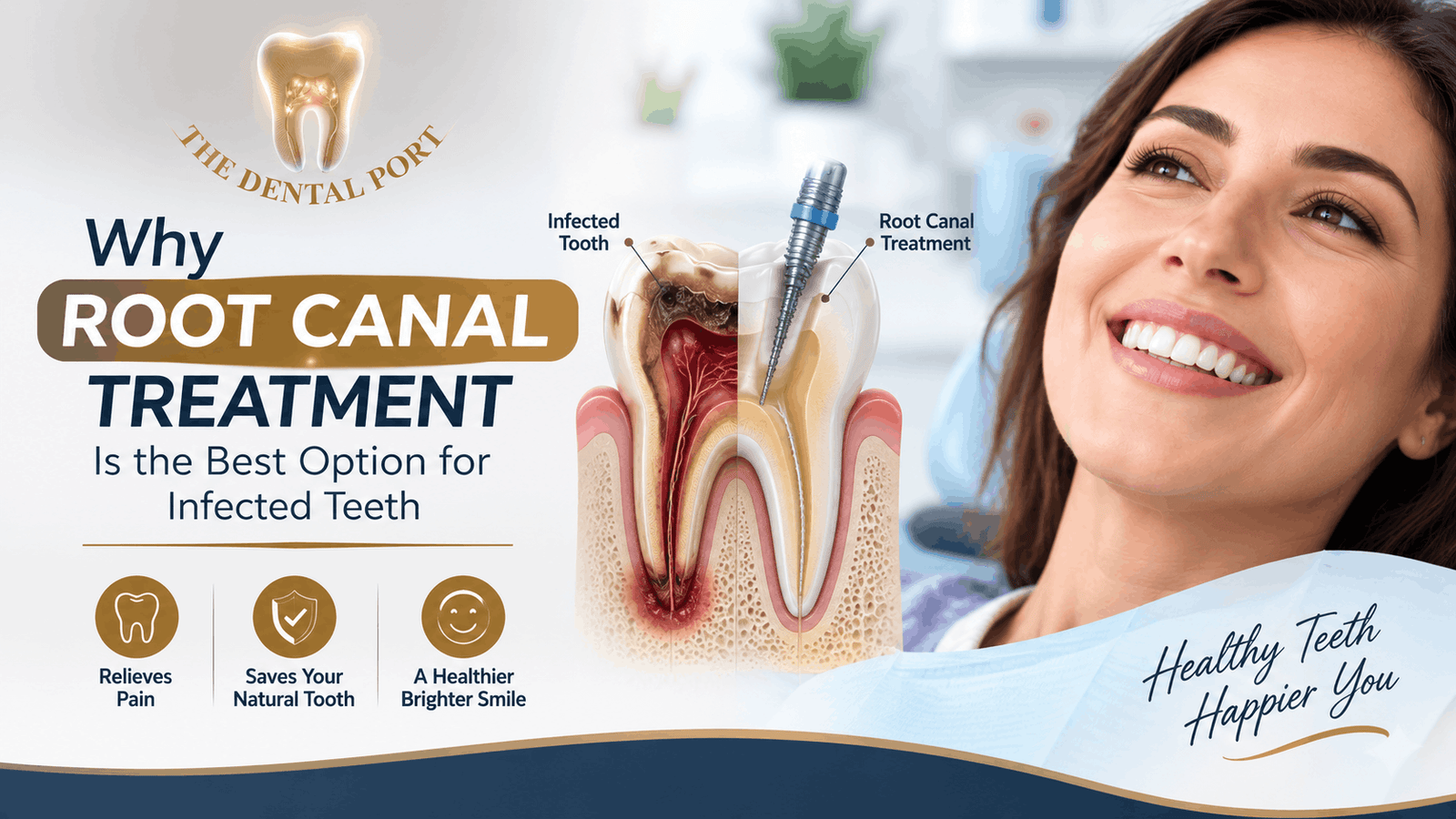
Root canal treatment is a procedure designed to treat infection or inflammation inside a tooth. During the procedure, the dentist carefully accesses the affected pulp chamber and removes infected or damaged tissue.
The root canals are then cleaned, shaped, and disinfected before being sealed with a suitable filling material. Depending on the amount of remaining tooth structure, a dental crown may subsequently be recommended to protect the treated tooth and restore its function. The exact procedure varies according to the tooth and complexity of the infection.
Why Saving the Natural Tooth Matters
One of the major benefits of root canal treatment is that it can allow a restorable natural tooth to remain in place. Natural teeth contribute to chewing function and help maintain the normal arrangement of the dental arch.
When a tooth is extracted, the resulting space may allow adjacent teeth to shift over time. Depending on the location of the missing tooth, replacement with an implant, bridge, or another restoration may therefore be considered. For a tooth that can be predictably restored, preserving it through root canal treatment can be an important treatment consideration.
Common Signs You May Need a Root Canal
Not every tooth infection produces the same symptoms. Some patients experience significant pain, while others may have an infection with relatively few symptoms.
Common warning signs can include:
- Persistent toothache
- Sensitivity to hot or cold
- Pain while biting or chewing
- Swelling around the tooth
- Tender or swollen gums
- A recurring pimple or drainage near the gum
- Tooth discoloration
- Deep decay or a fractured tooth
If you experience these symptoms, professional evaluation is recommended. Delaying treatment may allow an infection to progress.
Is Root Canal Treatment Painful?
Many patients worry that root canal treatment will be painful. Modern dentistry uses local anesthesia and contemporary techniques to make the procedure comfortable for most patients.
The purpose of treatment is to eliminate infected pulp that may be responsible for significant dental pain. Some tenderness or sensitivity can occur after treatment while the surrounding tissues recover. Your dentist can provide specific aftercare instructions based on your procedure and individual circumstances.
Root Canal Treatment vs Tooth Extraction
When a tooth is infected, patients may wonder whether removing it is easier than treating it. The answer depends on the condition of the tooth.
If sufficient healthy tooth structure remains and the tooth can be properly restored, root canal treatment may allow the natural tooth to be preserved. Extraction may be considered when the tooth is severely fractured, extensively damaged, or otherwise cannot be predictably restored.
Extraction also creates a missing-tooth space that may require future replacement. Therefore, the decision should be based on a professional examination rather than pain alone.
The Role of a Dental Crown After Root Canal Treatment
Some teeth become more vulnerable to fracture after root canal treatment, particularly teeth that have experienced substantial loss of tooth structure. In these situations, a crown may be recommended to provide additional protection and restore function.
Whether a crown is required depends on the type of tooth, the amount of remaining structure, the location of the tooth, and the treatment plan. Your dentist will explain whether additional restoration is appropriate after completing the root canal.
Advanced Dental Treatments in Noida
Modern dental technology has improved the diagnosis and management of infected teeth. Digital imaging and magnification can help dentists identify the number and shape of root canals and assess surrounding structures.
Advanced equipment can be particularly useful in complex cases involving unusual canal anatomy, previous root canal treatment, or extensive infection.
At The Dental Port, patients can receive comprehensive Dental Treatments in Noida, with treatment plans tailored to their specific dental conditions.
Why Choose The Dental Port?
Choosing an appropriate dental clinic is important when you need treatment for an infected tooth. The Dental Port combines modern dental technology with personalized treatment planning and patient-focused care.
The dental team evaluates the affected tooth and surrounding tissues before recommending a treatment. Depending on the diagnosis, options may include root canal treatment, restorative dentistry, extraction, or tooth replacement.
This comprehensive approach helps patients understand why a particular treatment has been suggested and what they can expect during the process.
Finding a Dental Clinic in Greater Noida
Patients searching for a Dental Clinic in Greater Noida should consider factors such as diagnostic facilities, dentist experience, treatment options, hygiene standards, technology, and follow-up care.
Root canal treatment requires careful cleaning and sealing of the root canal system. A detailed diagnosis and appropriate treatment planning are therefore important components of care. Regular follow-up can also help ensure that the treated tooth remains healthy and functional.
Expert Guidance From Dr. Purnima Sharma
When dealing with an infected tooth, professional evaluation is essential because symptoms alone cannot determine the severity of the problem. Dr. Purnima Sharma can evaluate the affected tooth and discuss appropriate treatment options based on its condition.
Patients searching online for the Best Dentist in Noida Sector 168 should focus on finding a qualified dental professional who provides detailed diagnosis, explains treatment alternatives, and develops care according to individual needs.
How to Prevent Future Tooth Infections
Prevention starts with consistent oral hygiene. Brush twice daily using fluoride toothpaste, clean between your teeth regularly, limit frequent sugary snacks and drinks, and attend routine dental examinations.
Treating cavities early can also reduce the risk of decay progressing toward the dental pulp. Patients should not ignore persistent sensitivity or tooth pain, as these can sometimes indicate an underlying dental problem.
Conclusion:
A tooth infection should never be ignored. When a tooth remains structurally restorable, Root Canal Treatment in Noida can provide a way to remove infection while preserving the natural tooth.
Root canal treatment is not automatically the right choice for every infected tooth. A severely fractured or non-restorable tooth may require extraction and subsequent replacement. A professional examination is therefore essential for determining the appropriate approach.
At The Dental Port, patients can receive personalized dental evaluation and comprehensive Dental Treatments in Noida. If you are experiencing persistent tooth pain, swelling, sensitivity, or discomfort while chewing, consulting a trusted Dental Clinic in Greater Noida can help identify the problem and explore appropriate treatment options.
FAQs – Root Canal Treatment in Noida
1. What are the main signs that I may need root canal treatment?
Persistent tooth pain, prolonged sensitivity to hot or cold, pain while chewing, swelling, gum tenderness, tooth discoloration, or signs of infection may indicate the need for evaluation. Only a dental examination can determine whether root canal treatment is appropriate.
2. Can a root canal save an infected tooth?
Yes, when the tooth has enough healthy structure and can be predictably restored, root canal treatment can remove the infected pulp and allow the natural tooth to remain in place.
3. Is root canal treatment better than extraction?
There is no single treatment that is appropriate for every patient. If a tooth can be predictably restored, root canal treatment may allow it to be preserved. Extraction may be necessary when the tooth cannot be adequately restored.
4. Will I need a crown after root canal treatment?
A crown may be recommended depending on the tooth’s location, remaining structure, and risk of fracture. Your dentist will determine whether additional protection is appropriate.
5. Why choose The Dental Port for root canal treatment?
The Dental Port provides comprehensive dental evaluation, modern diagnostic and treatment approaches, personalized care, and restorative options. Patients can discuss their condition and treatment alternatives with the dental team before proceeding.