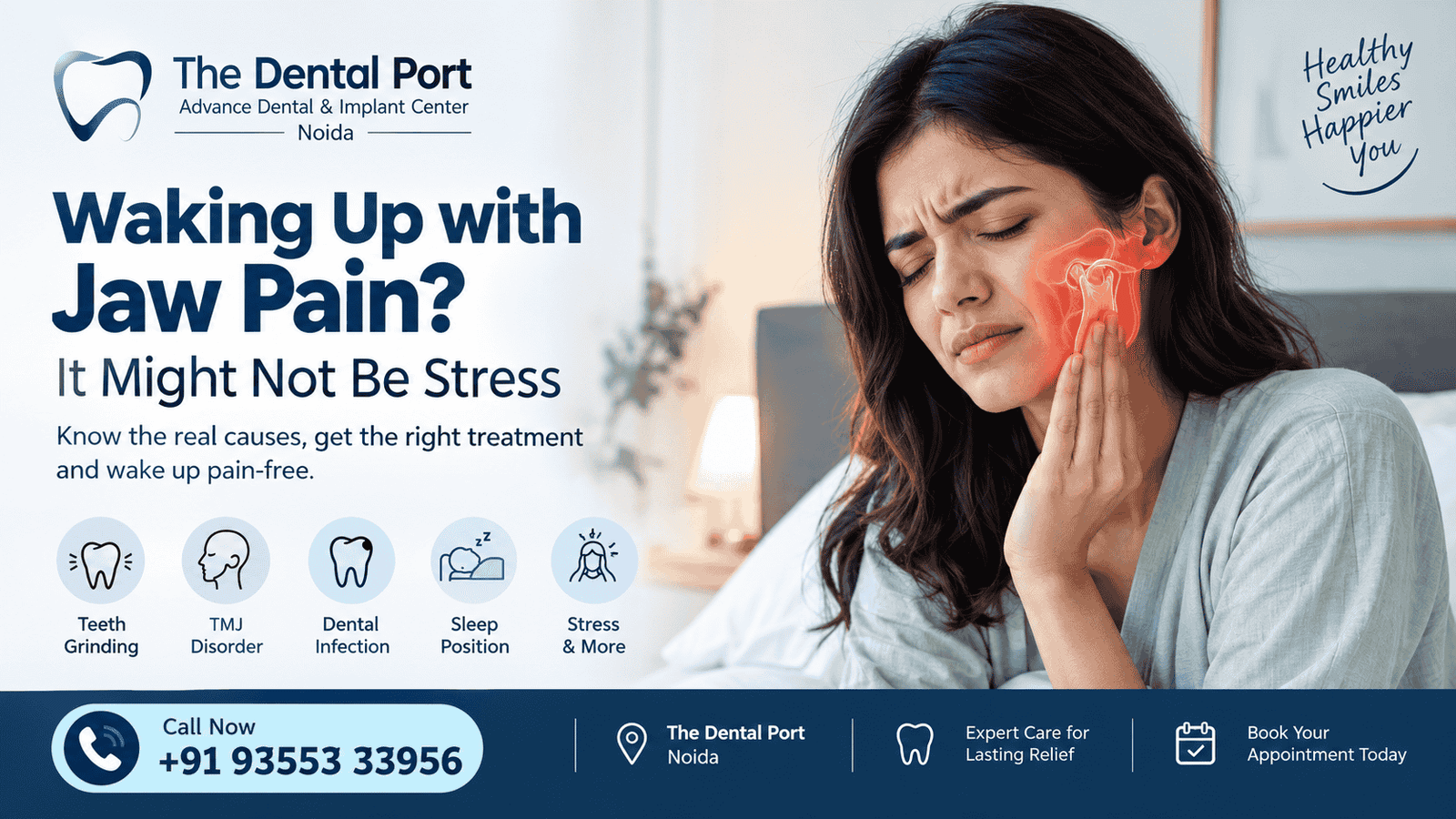
Do you wake up with jaw pain, stiffness, or an ache near your ear? You might assume it is stress, a bad sleeping position, or simply a poor night’s sleep. But if your jaw hurts every morning, there could be another explanation.
You may be clenching your teeth without realizing it. You may be grinding them while asleep. Your jaw joint could be irritated, or a tooth problem could be causing pain that spreads toward your face and ear.
The important thing to understand is this: morning jaw pain is a symptom, not a diagnosis. Finding the cause is the first step toward lasting relief.
At The Dental Port – Advance Dental & Implant Center, Noida, we help patients understand dental and jaw-related symptoms and explore appropriate treatment options based on their individual needs.
If you frequently wake up with jaw pain, discomfort while chewing, or difficulty opening your mouth, do not simply dismiss it as stress.
Need a dental evaluation in Noida?
Call +91 93553 33956 to contact The Dental Port and enquire about an appointment.
Table of Contents
- Why do you wake up with jaw pain?
- Is stress really responsible for morning jaw pain?
- Six possible causes of jaw pain when waking up
- How can you tell if your jaw pain needs attention?
- What can you do for morning jaw pain relief?
- Which jaw exercises are safe?
- What treatments are available for jaw pain?
- When should you see a dentist?
- What is the cost of jaw pain treatment in Noida?
- Frequently asked questions
Why Do You Wake Up With Jaw Pain?
Waking up with jaw pain can have several causes, including sleep-related teeth grinding, unconscious jaw clenching, jaw joint disorders, dental infections, and muscle tension.
During sleep, some people repeatedly clench their teeth or grind them together. This activity can place extra load on the jaw muscles and temporomandibular joints (TMJs), which connect the lower jaw to the skull.
You might notice one or more of these symptoms:
- Jaw stiffness immediately after waking up
- Pain near the ear or along the jawbone
- Soreness when chewing breakfast
- A tired or tight feeling in the cheeks
- Headaches around the temples
- Clicking or popping sounds when opening the mouth
- Tooth sensitivity or teeth that appear worn down
- Difficulty opening the mouth comfortably
Some people experience pain on only one side, while others feel discomfort across the entire jaw.
The pattern of symptoms can provide useful clues, but it cannot establish the cause on its own.
The question is not just why your jaw hurts. It is what is putting stress on your jaw in the first place.
Is Stress Really Responsible for Morning Jaw Pain?
Stress can contribute to jaw pain, but it is not the only possible explanation.
When you feel anxious, concentrate intensely, or deal with prolonged pressure, you may clench your teeth without noticing. Some people also experience sleep-related bruxism, which involves grinding or clenching the teeth during sleep.
Repeated clenching can fatigue the muscles around the jaw and contribute to morning soreness.
However, treating stress alone may not resolve the problem if the pain is related to a tooth infection, a jaw joint disorder, or another underlying condition.
If you wake up with a tight jaw, recurring headaches, or tooth sensitivity, a dental assessment can help determine whether grinding, clenching, or another dental issue might be contributing.
Six Possible Causes of Jaw Pain When Waking Up
1. Teeth Clenching During Sleep
Do you wake up with a tight jaw even though your teeth do not hurt?
Unconscious jaw clenching could be one explanation.
When you clench, your jaw muscles contract and put pressure on your teeth and supporting structures. Repeated episodes may leave your jaw feeling tired, stiff, or sore the following morning.
Possible signs include:
- Jaw muscle tenderness
- Pain around the cheeks or temples
- Morning headaches
- Discomfort when chewing
- A habit of keeping your teeth pressed together during the day
A dentist can assess your symptoms and check for signs of tooth wear or muscle tenderness. Treatment depends on the findings and may include habit awareness, conservative jaw care, or other appropriate measures.
2. Teeth Grinding at Night
Sleep bruxism occurs when a person grinds or clenches their teeth during sleep. They may not even know it is happening unless someone hears the grinding or they notice symptoms the next morning.
Repeated grinding can contribute to:
- Worn tooth surfaces
- Chipped or damaged teeth
- Tooth sensitivity
- Jaw muscle soreness
- Headaches
- Discomfort around the jaw joints
If you suspect nighttime teeth grinding, do not wait for visible tooth damage before seeking advice.
A dental examination can help identify possible signs of grinding and determine whether a custom-made protective night guard may be appropriate.
Important: A night guard can protect teeth from some effects of grinding, but it does not necessarily eliminate the underlying grinding activity or resolve every cause of jaw pain.
3. Sleeping Position and Jaw Pressure
Sometimes, the way you sleep may contribute to morning discomfort.
For example, sleeping with your face pressed firmly into a pillow may put sustained pressure on one side of the jaw. An awkward sleeping position may also contribute to muscle discomfort.
You can try:
- Keeping your head and neck comfortably supported
- Avoiding prolonged direct pressure on your jaw
- Choosing a sleeping position that does not aggravate symptoms
- Noticing whether pain is consistently worse on one side
However, do not assume your sleeping position is responsible simply because the pain occurs in the morning.
If the discomfort continues, increases, or interferes with chewing, it deserves further evaluation.
4. TMJ Disorders: When the Jaw Joint Is the Problem
The temporomandibular joints connect your lower jaw to your skull. They help you talk, chew, yawn, and open your mouth.
Problems affecting the jaw joints or surrounding muscles are commonly grouped under the term temporomandibular disorders (TMD).
Possible symptoms include:
- Pain in or around the jaw joint
- Pain near the ear
- Discomfort while chewing
- Restricted mouth opening
- Jaw stiffness
- Painful clicking or popping
- Episodes of jaw locking
A clicking sound without pain or restricted movement does not necessarily mean that treatment is required. However, painful clicking, persistent discomfort, or difficulty opening the mouth should be assessed.
Treatment depends on the specific problem and may involve conservative measures, appropriate exercises, physiotherapy, or other specialist care when indicated.
At The Dental Port in Noida, you can enquire about an evaluation to help determine whether your symptoms may be dental, muscular, or related to the jaw joint.
5. A Cavity, Cracked Tooth, or Dental Infection
Not all jaw pain originates in the jaw joint.
A deep cavity, cracked tooth, inflamed dental pulp, or dental abscess can cause pain that spreads into the surrounding jaw or face.
Look out for accompanying symptoms such as:
- Pain when biting down
- Sensitivity to hot or cold foods
- Persistent toothache
- Swelling around the gums or face
- A bad taste in the mouth
- Fever or feeling generally unwell
A dental infection needs appropriate treatment rather than simply managing the pain.
If swelling, fever, or worsening dental pain develops, seek prompt dental care. Facial or neck swelling accompanied by difficulty breathing or swallowing requires emergency medical attention.
Do not assume that pain near the ear is a TMJ problem until dental causes have also been considered.
6. Sinus Pressure or Other Causes of Facial Pain
Sinus congestion can sometimes cause pressure around the cheeks and upper teeth, particularly when the maxillary sinuses are inflamed.
Other conditions involving the ear, facial nerves, or surrounding muscles can also produce pain that feels as though it originates in the jaw.
Clues such as nasal congestion, facial pressure, ear symptoms, or pain unrelated to chewing may help guide further assessment.
If your symptoms do not appear to be dental, your dentist may recommend evaluation by an appropriate medical professional.
How Can You Tell If Your Jaw Pain Needs Attention?
The following guide can help you decide what to do next. It is not a diagnostic test.
| What you notice | What to consider |
|---|---|
| Jaw soreness every morning | Ask a dentist about grinding, clenching, and muscle-related causes |
| Jaw pain near the ear | Consider jaw joint, muscle, dental, or ear-related causes |
| Worn teeth or sensitivity | Get assessed for possible grinding or tooth damage |
| Pain while biting | Arrange a dental examination for possible tooth-related causes |
| Painful clicking or limited mouth opening | Seek assessment for a possible jaw joint disorder |
| Toothache with swelling or fever | Seek urgent dental care |
| Jaw pain with chest pressure, breathlessness, sweating, or nausea | Seek emergency medical care |
Persistent jaw pain should not be ignored simply because it improves after you get out of bed.
What Can You Do for Morning Jaw Pain Relief?
If your jaw discomfort is mild and there are no concerning symptoms, a few conservative measures may help while you arrange an assessment if needed.
Apply a warm compress
Place a comfortably warm, not hot, compress against the affected jaw muscles for around 10–15 minutes. Stop if it aggravates the pain.
Choose softer foods temporarily
Avoid foods that require excessive chewing, such as hard nuts, tough meat, or chewy sweets, while your jaw is painful.
Keep your jaw relaxed
When you are not eating or speaking, try to keep your teeth slightly apart rather than pressing them together.
Avoid excessive jaw movements
Limit gum chewing, wide yawning, and repeatedly testing your jaw’s range of movement.
Avoid forcing your jaw open
If your jaw locks or opening becomes difficult, do not try to force it into position. Seek professional evaluation.
These steps may help with temporary discomfort, but they do not replace treatment for an underlying dental infection or significant jaw joint problem.
If you are repeatedly searching for how to stop jaw pain in the morning, the most useful next step is to establish what is causing it.
Which Jaw Exercises Are Safe?
Gentle movement may be helpful for some people with jaw muscle discomfort, but the right exercises depend on the diagnosis.
If your symptoms are mild and your jaw is moving normally, you may try relaxing your facial muscles and allowing your jaw to rest in a comfortable position.
Avoid aggressive stretching, forceful opening, or exercises that reproduce pain.
If you experience jaw locking, significant restriction, swelling, or increasing pain, do not begin a self-directed exercise programme without professional guidance.
A dentist or appropriately trained clinician can advise whether jaw exercises are suitable for your particular condition.
What Treatments Are Available for Jaw Pain in Noida?
There is no single treatment that works for every cause of jaw pain. The goal is to identify the underlying problem and select the least invasive appropriate treatment.
At The Dental Port – Advance Dental & Implant Center, Noida, the appropriate next step depends on your symptoms and clinical findings.
Possible treatment pathways include:
For teeth grinding and clenching: Assessment of tooth wear, advice on reducing daytime clenching, and a protective night guard when clinically indicated.
For jaw muscle discomfort: Conservative self-care guidance, avoiding aggravating habits, and referral for physiotherapy when appropriate.
For suspected TMJ disorders: Assessment of jaw movement, joint symptoms, and muscle tenderness, followed by a condition-specific management plan.
For cavities or damaged teeth: Appropriate restorative treatment based on the extent of damage.
For dental infections: Timely treatment of the affected tooth or surrounding tissues.
For persistent or complex symptoms: Referral to an appropriate specialist when the findings suggest that additional expertise is needed.
The important distinction is that treatment should follow diagnosis. A night guard, medication, exercise, or dental procedure should not be recommended automatically for every patient with jaw pain.
What Is the Cost of Jaw Pain Treatment in Noida?
The cost of jaw pain treatment depends on what is causing the discomfort and which investigations or treatments are necessary.
For example, an examination for suspected teeth grinding may involve different steps from the management of an infected tooth or a persistent jaw joint disorder.
Your treatment cost may depend on:
- The clinical examination required
- Whether dental X-rays or other investigations are indicated
- Whether the problem involves a tooth, jaw muscle, or joint
- Whether a custom-made night guard is recommended
- Whether restorative dental treatment or specialist referral is needed
There is no single reliable price for all types of jaw pain treatment. The appropriate approach is to establish the cause first and then discuss the recommended treatment and its cost.
Contact The Dental Port at +91 93553 33956 to enquire about an appointment in Noida and the applicable consultation charges.
When Should You See a Dentist for Jaw Pain?
Arrange a dental assessment if:
- Your jaw hurts repeatedly when you wake up.
- The pain continues or keeps returning.
- You have difficulty chewing comfortably.
- Your teeth feel sensitive or appear worn.
- Your jaw clicks painfully or locks.
- You have a toothache that spreads towards the ear.
- You notice swelling around a tooth, gum, or jaw.
Seek urgent care for significant facial swelling, fever associated with dental pain, or rapidly worsening symptoms. Difficulty breathing or swallowing requires emergency medical attention.
Jaw pain can sometimes have causes that are not dental. A proper evaluation helps determine whether dental treatment or another type of medical care is needed.
Why Choose The Dental Port in Noida?
When jaw pain keeps interrupting your mornings, you need more than a guess about its cause.
At The Dental Port – Advance Dental & Implant Center, Noida, our approach is centred on understanding your symptoms, evaluating relevant dental concerns, and discussing appropriate next steps.
We can help you enquire about assessment for concerns involving:
- Teeth grinding and clenching
- Toothache and damaged teeth
- Dental infections
- Jaw discomfort and possible TMJ-related symptoms
- Preventive and restorative dental care
Every patient’s condition is different, and treatment recommendations should be based on individual findings.
Book Your Dental Appointment
Waking up with jaw pain every day is not something you should have to ignore.
Whether you notice a dull ache near your ear, stiffness when opening your mouth, or soreness after a night’s sleep, identifying the cause is the first step towards appropriate care.
Contact The Dental Port – Advance Dental & Implant Center, Noida to discuss your symptoms and enquire about an appointment.
Call: +91 93553 33956
Website: https://www.thedentalport.com/
Frequently Asked Questions About Morning Jaw Pain
1. Why do I wake up with jaw pain every morning?
Morning jaw pain may be caused by sleep-related teeth grinding, jaw clenching, muscle tension, TMJ disorders, dental problems, or pressure on the jaw during sleep. Repeated symptoms warrant an assessment to identify the likely cause.
2. Can stress cause jaw pain while sleeping?
Yes. Stress may contribute to jaw clenching and can be associated with sleep bruxism. However, not all morning jaw pain is caused by stress, so persistent symptoms should be evaluated.
3. Why does my jaw hurt near my ear when I wake up?
The jaw joint is located close to the ear, so pain in this area can occur with jaw joint disorders or muscle tension. Dental problems and ear-related conditions can also cause similar symptoms.
4. Why does my jaw hurt on only one side?
One-sided jaw pain can be associated with uneven muscle strain, a jaw joint problem, sleeping pressure, or a dental issue affecting one side. The location alone cannot identify the cause.
5. Can teeth grinding damage my teeth and jaw?
Repeated grinding can wear down tooth surfaces, contribute to cracks or sensitivity, and cause jaw muscle soreness. A dentist can assess possible damage and advise whether protective treatment is appropriate.
6. What is the fastest way to relieve morning jaw pain?
For mild muscle-related discomfort, a warm compress, softer foods, and avoiding excessive chewing may provide temporary relief. The fastest appropriate treatment depends on the cause, and persistent or worsening pain needs assessment.
7. Can TMJ disorders cause headaches?
Yes. Some temporomandibular disorders can be associated with pain around the temples and headaches. However, headaches have many possible causes, so they should not automatically be attributed to the jaw joint.
8. Should I use a night guard for jaw pain?
A night guard may be appropriate when teeth grinding or clenching is contributing to tooth damage. It should be selected based on clinical assessment because it does not treat every cause of jaw pain.
9. When is jaw pain an emergency?
Jaw pain with difficulty breathing or swallowing, significant rapidly spreading swelling, or symptoms suggestive of a heart attack requires emergency care. Fever with dental pain or facial swelling also requires prompt assessment.
10. Where can I enquire about jaw pain treatment in Noida?
You can contact The Dental Port – Advance Dental & Implant Center, Noida, at +91 93553 33956 to enquire about a dental appointment and the appropriate assessment for your symptoms.
Medical review note: This article provides general educational information and does not replace a clinical examination. Persistent, severe, or unexplained jaw pain should be evaluated by an appropriate healthcare professional.