Missing teeth can affect much more than the appearance of your smile. They can make chewing difficult, influence speech, and gradually contribute to changes in the jawbone. Modern implant dentistry offers several solutions for replacing missing teeth, including traditional dental implants and specialized zygomatic implants. However, these treatments are designed for different clinical situations. Understanding their differences can help you make an informed decision after consulting your dentist.
For patients exploring Zygomatic Implants in Noida or conventional Dental Implants, the most suitable treatment depends on factors such as bone availability, oral health, medical history, and the number of missing teeth. At The Dental Port, treatment planning focuses on individual dental needs, appropriate diagnostic evaluation, and long-term oral health.
What Are Traditional Dental Implants?
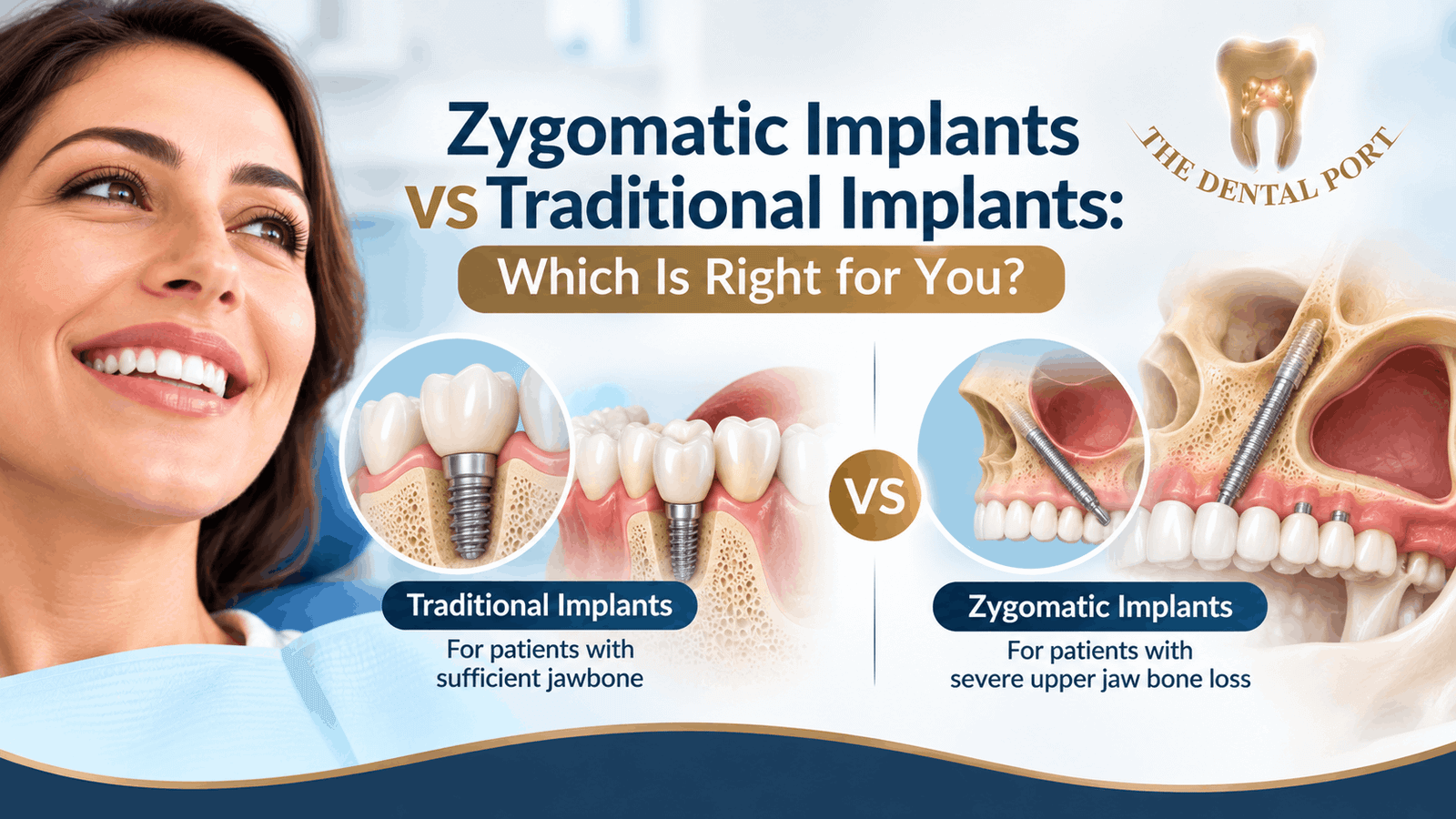
Traditional dental implants are small, biocompatible fixtures, usually made from titanium, that are surgically placed into the jawbone to replace missing tooth roots. After placement, the implant gradually integrates with the surrounding bone through a process called osseointegration.
Once adequate healing has occurred, an artificial tooth, bridge, or full-arch restoration can be attached to the implant. Traditional implants can be used to replace a single missing tooth, several teeth, or an entire dental arch.
They are commonly recommended when patients have sufficient healthy jawbone to support the implants. In cases where bone volume is inadequate, additional procedures such as bone grafting or sinus augmentation may sometimes be considered.
What Are Zygomatic Implants?
Zygomatic implants are specialized, longer dental implants designed primarily for patients with severe bone loss in the upper jaw. Unlike conventional implants, which are anchored in the jawbone, zygomatic implants obtain their support from the zygomatic bone, commonly known as the cheekbone.
The cheekbone can provide an alternative anchorage point when the upper jaw does not have enough bone to support conventional implants. This approach may help selected patients avoid extensive bone grafting procedures.
Zygomatic Implants may be considered for individuals who have lost multiple upper teeth, experienced significant bone resorption, or have previously been advised that conventional implant placement is difficult.
Key Differences Between Zygomatic and Traditional Implants
The primary difference between these implant systems is their placement location and the type of bone used for support.
Traditional implants are placed directly into the jawbone and are suitable for many patients with adequate bone volume. Zygomatic implants extend into the cheekbone and are generally reserved for complex cases involving severe upper-jaw bone deficiency.
Their treatment planning also differs. Traditional implant procedures may be relatively straightforward in suitable cases, whereas zygomatic implant placement requires detailed anatomical assessment and specialized surgical expertise.
Neither treatment is universally better. The correct approach depends on the patient’s individual clinical condition.
Who Is Suitable for Traditional Dental Implants?
Traditional implants may be appropriate for patients who have sufficient jawbone density and volume, healthy gums, and good overall oral health. They are commonly used for replacing individual teeth or supporting bridges and full-mouth restorations.
Patients with moderate bone loss may still be candidates for conventional implants after appropriate preparatory procedures. Bone grafting can sometimes help create the necessary foundation for implant placement. A detailed dental examination and imaging assessment are necessary before deciding whether traditional implants are suitable.
Who May Need Zygomatic Implants?
Zygomatic implants are generally considered for patients with severe bone loss in the upper jaw. This may occur after long-term tooth loss, advanced periodontal disease, trauma, or previous unsuccessful implant procedures.
They may also be considered when conventional implants would require extensive bone reconstruction. By using the cheekbone for support, this specialized approach can provide another option for selected patients seeking fixed upper-teeth replacement.
However, zygomatic implants are complex surgical devices and are not appropriate for every patient with missing teeth. A specialist evaluation is essential.
Can Zygomatic Implants Avoid Bone Grafting?
One important advantage of zygomatic implants is that they may eliminate the need for extensive bone grafting in carefully selected patients. Because the implants use the cheekbone for anchorage, they do not depend on the same amount of upper-jaw bone required by traditional implants.
This can potentially reduce the number of treatment stages and avoid certain bone augmentation procedures. However, it does not guarantee that every patient will avoid all additional procedures. The final treatment plan depends on individual anatomy, sinus conditions, oral health, and restorative requirements.
The Role of Advanced Dental Technology
Accurate diagnosis is essential for both traditional and zygomatic implant procedures. Modern dental imaging, particularly three-dimensional CBCT scans, helps evaluate bone availability, anatomical structures, and the relationship between the jaw and surrounding areas.
Digital treatment planning can assist in determining implant positions and developing a suitable restorative approach. These technologies support clinical decision-making, but the final treatment recommendation must always be based on a comprehensive professional examination.
At The Dental Port, modern diagnostic approaches can support personalized Dental Treatmentsaccording to each patient’s needs.
Comparing Recovery and Long-Term Care
Recovery varies depending on the complexity of the procedure, the number of implants placed, the patient’s general health, and the type of restoration used.
Traditional implant treatment may involve a healing period before the final artificial teeth are attached. Some suitable patients may receive temporary restorations during the healing process.
Zygomatic implant treatment may follow a different timeline because of its specialized surgical technique and the condition of the upper jaw. Patients must follow their dentist’s instructions regarding diet, oral hygiene, medication, and follow-up appointments.
Both implant systems require regular professional monitoring and consistent oral hygiene to maintain the health of the surrounding tissues.
Benefits and Considerations of Both Treatments
Traditional implants are versatile and widely used for replacing missing teeth. They can provide stable support for individual crowns, bridges, and full-arch restorations when sufficient bone is available.
Zygomatic implants offer an alternative for patients with severe upper-jaw bone deficiency. They may reduce the need for extensive bone grafting and provide an option for fixed restorations in complex cases.
However, zygomatic implant surgery involves more complex anatomy and potential risks, including sinus-related complications, infection, and implant-related problems. Patients should discuss these considerations with their treating dental professional before proceeding.
Why Choose The Dental Port for Dental Implants in Noida?
Choosing a suitable Dental Clinic in Greater Noida is an important part of your implant treatment journey. Patients should consider diagnostic facilities, treatment planning, professional experience, hygiene standards, communication, and long-term follow-up care.
At The Dental Port, patients can discuss conventional and advanced implant options based on their individual dental conditions. The focus is on evaluating the available treatment choices and explaining their potential benefits, limitations, and maintenance requirements.
Expert Dental Guidance From Dr. Purnima Sharma
A personalized consultation helps determine whether conventional implants, bone grafting, zygomatic implants, or another restorative solution may be appropriate.
Dr. Purnima Sharma can help patients understand their dental condition and discuss suitable treatment options. Patients searching for the Best Dentist should look for a qualified dental professional who provides careful diagnosis, transparent explanations, and treatment recommendations based on clinical findings.
Conclusion:
Both traditional and zygomatic implants can play an important role in restoring missing teeth, but they are intended for different clinical situations. Traditional implants are commonly used when sufficient jawbone is available, while zygomatic implants may offer an alternative for patients with severe upper-jaw bone loss.
If you are considering Dental Implants in Noida, the first step is a detailed dental examination and appropriate imaging. At The Dental Port, patients can explore personalized implant solutions and understand which approach may suit their oral health requirements.
Whether you need a conventional implant or are exploring advanced Zygomatic Implants in Noida, informed treatment planning can help you work toward a functional, comfortable, and confident smile.
FAQs – Zygomatic Implants vs Traditional Implants in Noida
1. What is the main difference between zygomatic and traditional dental implants?
Traditional implants are placed in the jawbone, while zygomatic implants are anchored in the cheekbone. Zygomatic implants are generally considered for patients with severe bone loss in the upper jaw.
2. Are zygomatic implants suitable for everyone?
No. They are specialized implants primarily intended for selected patients with significant upper-jaw bone deficiency. A detailed examination and 3D imaging are required to determine suitability.
3. Can traditional dental implants be placed without bone grafting?
Yes, if sufficient healthy jawbone is available. Patients with inadequate bone may require grafting or another treatment approach, depending on their clinical condition.
4. Are zygomatic implants a permanent solution?
Zygomatic implants are designed as long-term tooth-replacement solutions. Their longevity depends on proper placement, healing, oral hygiene, general health, and regular professional maintenance. No implant can be guaranteed to last a lifetime.
5. Where can I get dental implant treatment in Noida?
Patients can consult The Dental Port for an evaluation of conventional and advanced implant treatment options. The dental team can assess bone availability, oral health, and individual requirements before recommending an appropriate treatment plan.