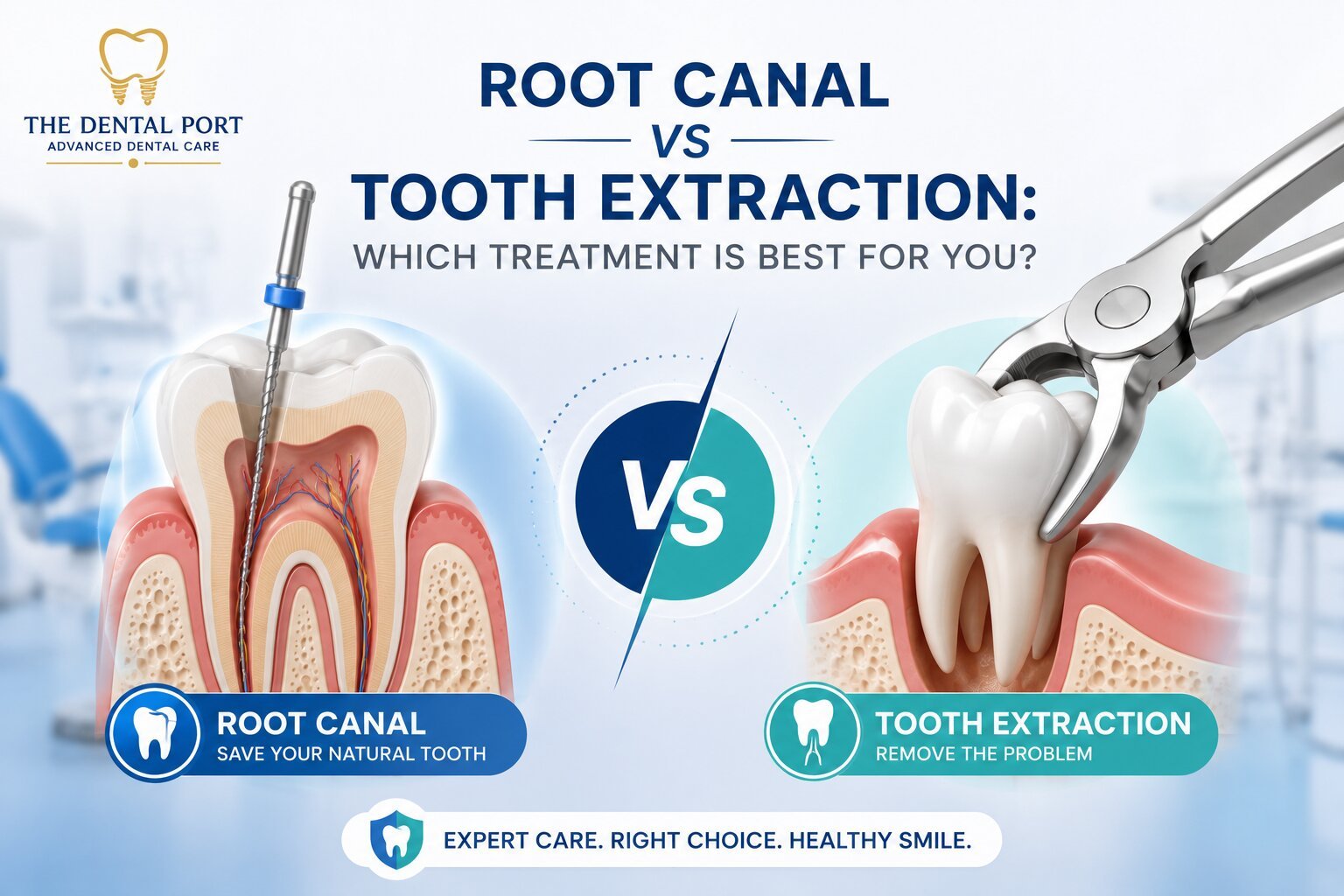
When a tooth becomes severely decayed, infected, cracked, or damaged, two treatment options are commonly discussed: root canal treatment and tooth extraction. While both procedures can address serious dental problems, they have very different goals. A root canal aims to save your natural tooth, whereas extraction removes the affected tooth and may require replacement later.
Understanding the difference between these treatments can help you have a more informed conversation with your dentist. If you are experiencing persistent tooth pain or have been advised to consider extraction, a professional evaluation at a trusted Dental Clinic in Greater Noida can help determine which option is appropriate for your condition.
What Is Root Canal Treatment?
Root Canal Treatment is a procedure designed to save a natural tooth that has an infected or inflamed pulp. The pulp contains nerves and blood vessels inside the tooth. Deep decay, cracks, repeated dental procedures, or trauma can allow bacteria to reach this area and cause infection.
During root canal treatment, the infected pulp is carefully removed. The inside of the tooth is cleaned, disinfected, filled, and sealed. A crown may then be recommended to protect the treated tooth and restore its strength and appearance. The primary advantage of root canal treatment is that it allows you to keep your natural tooth rather than removing it.
What Is Tooth Extraction?
Tooth extraction involves completely removing a tooth from its socket. Dentists may recommend extraction when a tooth is too damaged or compromised to be predictably restored.
Extraction may be considered for severely fractured teeth, extensive decay, advanced periodontal disease, or teeth that cannot be adequately treated with restorative procedures. Although removing a problematic tooth can eliminate the immediate source of infection or discomfort, the resulting gap may need to be addressed with a replacement option such as a dental implant, bridge, or denture.
Root Canal vs Tooth Extraction: The Main Difference
The biggest difference is preservation. Root canal treatment attempts to preserve the natural tooth, while extraction removes it. Whenever a natural tooth can be safely and predictably restored, preserving it is generally worth considering. Natural teeth provide important chewing function and help maintain the alignment of neighboring teeth.
Extraction can be the appropriate choice when the tooth has suffered extensive damage and cannot be restored successfully.Your dentist should assess the tooth’s structure, infection, surrounding bone and gum health, and overall prognosis before recommending either procedure.
When Is Root Canal Treatment Usually Recommended?
Root canal treatment may be considered when the dental pulp has become irreversibly inflamed or infected. Common warning signs include persistent toothache, prolonged sensitivity to hot or cold, pain while chewing, swelling around the tooth, or an abscess.
Sometimes, however, a severely infected tooth may not cause significant pain. This is why dental examinations and appropriate imaging are important for diagnosis. If the tooth has sufficient healthy structure to support a restoration, root canal treatment may provide an opportunity to preserve it.
When Is Tooth Extraction a Better Option?
Extraction may be recommended when a tooth cannot be predictably saved. This can happen when decay extends extensively below the gumline, a fracture makes restoration impossible, or there is insufficient healthy tooth structure remaining.
Advanced gum disease can also compromise the supporting bone and tissues around a tooth. In certain cases, extraction may provide a more predictable outcome than attempting to restore a tooth with a poor long-term prognosis. The decision should be based on professional diagnosis rather than pain level alone.
Benefits of Saving Your Natural Tooth
Preserving your natural tooth through root canal treatment can offer several advantages. Your natural tooth maintains its original position and continues to support normal chewing.
Keeping the tooth can also help prevent neighboring teeth from shifting into the empty space. It may reduce the need for additional restorative procedures associated with replacing an extracted tooth. For many patients, a successfully restored natural tooth can provide comfortable function for many years when supported by good oral hygiene and regular dental care.
What Happens After Tooth Extraction?
If extraction is necessary, replacing the missing tooth may be important for restoring function and preventing unwanted movement of neighboring teeth.
One of the most effective modern replacement options is a dental implant. A Dental Implant in Noida can replace the missing tooth root and support a crown designed to resemble a natural tooth. Depending on your oral health and bone condition, your dentist may also discuss bridges or removable dentures as alternative options.
Which Treatment Is Less Expensive?
The total cost depends on the complexity of treatment, restoration requirements, and individual oral health. Root canal treatment generally involves the procedure itself followed by a restoration such as a crown when required.
Extraction may initially appear simpler, but replacing the missing tooth can add to the overall treatment cost. If an implant is selected, additional planning, implant placement, and restoration are involved. Rather than choosing based solely on immediate cost, consider the long-term health, function, and maintenance requirements of each option.
Does Root Canal Treatment Hurt?
Modern root canal procedures are performed using local anesthesia and advanced dental techniques. Most patients experience little or no significant pain during the procedure.
Some tenderness may occur after treatment, particularly if the tooth was significantly infected before the procedure. Your dentist can provide appropriate aftercare instructions to support recovery. The pain caused by an untreated dental infection can often be much more uncomfortable than the treatment itself.
Why Choose The Dental Port?
Choosing an experienced dental clinic is important when deciding between root canal treatment and extraction. The Dental Port provides comprehensive dental diagnosis and treatment planning designed around individual patient needs.
The clinic combines modern dental technology with personalized care to evaluate whether a damaged tooth can be preserved or whether extraction and replacement may provide a better long-term solution. Patients can discuss their symptoms, treatment alternatives, expected recovery, and restoration options before making a decision.
Expert Guidance From the Best Dentist in Noida Sector 168
A detailed evaluation by the Best Dentist in Noida Sector 168 can help determine the prognosis of a damaged or infected tooth.
Your dentist may evaluate the tooth’s structure, pulp condition, surrounding bone, gum health, and bite before recommending treatment. This comprehensive approach helps avoid unnecessary extraction while also preventing attempts to save a tooth when the prognosis is poor.
How to Make the Right Decision
There is no universal answer to whether root canal treatment or extraction is better. The right choice depends on the condition of your tooth and your overall oral health.
Root canal treatment may be preferable when the tooth can be predictably restored. Extraction may be appropriate when the tooth is severely damaged and cannot be successfully repaired. If extraction is necessary, discuss tooth replacement options promptly. A dental implant, bridge, or denture may help restore function and appearance.
Conclusion:
Both root canal treatment and tooth extraction have an important place in modern dentistry. Root canal treatment focuses on saving the natural tooth, while extraction removes a tooth that cannot be predictably restored.
If you are experiencing tooth pain, swelling, sensitivity, or other dental symptoms, avoid delaying professional evaluation. A consultation at a trusted Dental Clinic in Greater Noida can help identify the cause of the problem and determine the most appropriate treatment.
At The Dental Port, patients receive personalized treatment recommendations based on their dental condition, with modern options available for both tooth preservation and replacement. Whether you require Root Canal Treatment or eventually need a Dental Implant in Noida, professional diagnosis and timely care can help protect your smile and long-term oral health.
FAQs – Find the Best Treatment for Your Tooth
1. Is root canal treatment better than tooth extraction?
When a natural tooth can be predictably restored, root canal treatment can help preserve it. Extraction may be more appropriate when the tooth is too severely damaged to save.
2. How do I know whether my tooth needs a root canal or extraction?
A dentist needs to examine the tooth and may use dental imaging to assess the extent of infection, decay, fracture, and supporting bone. The final recommendation depends on the tooth’s prognosis.
3. What happens if I extract a tooth instead of getting a root canal?
After extraction, the missing tooth may need to be replaced with an implant, bridge, or denture depending on your oral health and treatment goals.
4. Can a dental implant replace a tooth after extraction?
Yes. A Dental Implant in Noida can replace the missing tooth root and support a customized crown. Your dentist will determine whether you have suitable bone and gum conditions for implant treatment.
5. Why choose The Dental Port for root canal or extraction treatment?
The Dental Port provides comprehensive dental evaluation, modern treatment techniques, personalized care, and guidance on tooth-preservation and replacement options based on each patient’s individual needs.