Losing multiple teeth can affect much more than your smile. Missing teeth can make eating difficult, impact speech, change facial appearance, and reduce confidence in everyday situations. For patients with significant tooth loss and severe upper-jaw bone loss, conventional dental implants may sometimes require additional procedures such as bone grafting. Zygomatic implants offer an advanced alternative for carefully selected patients by using the cheekbone as a foundation for implant support.
For patients exploring a Zygomatic Implant Clinic, understanding this advanced treatment option can help in making an informed decision. The Dental Port provides comprehensive implant evaluation and personalized treatment planning for patients seeking solutions for complex tooth loss and full-mouth rehabilitation.
What Are Zygomatic Implants?
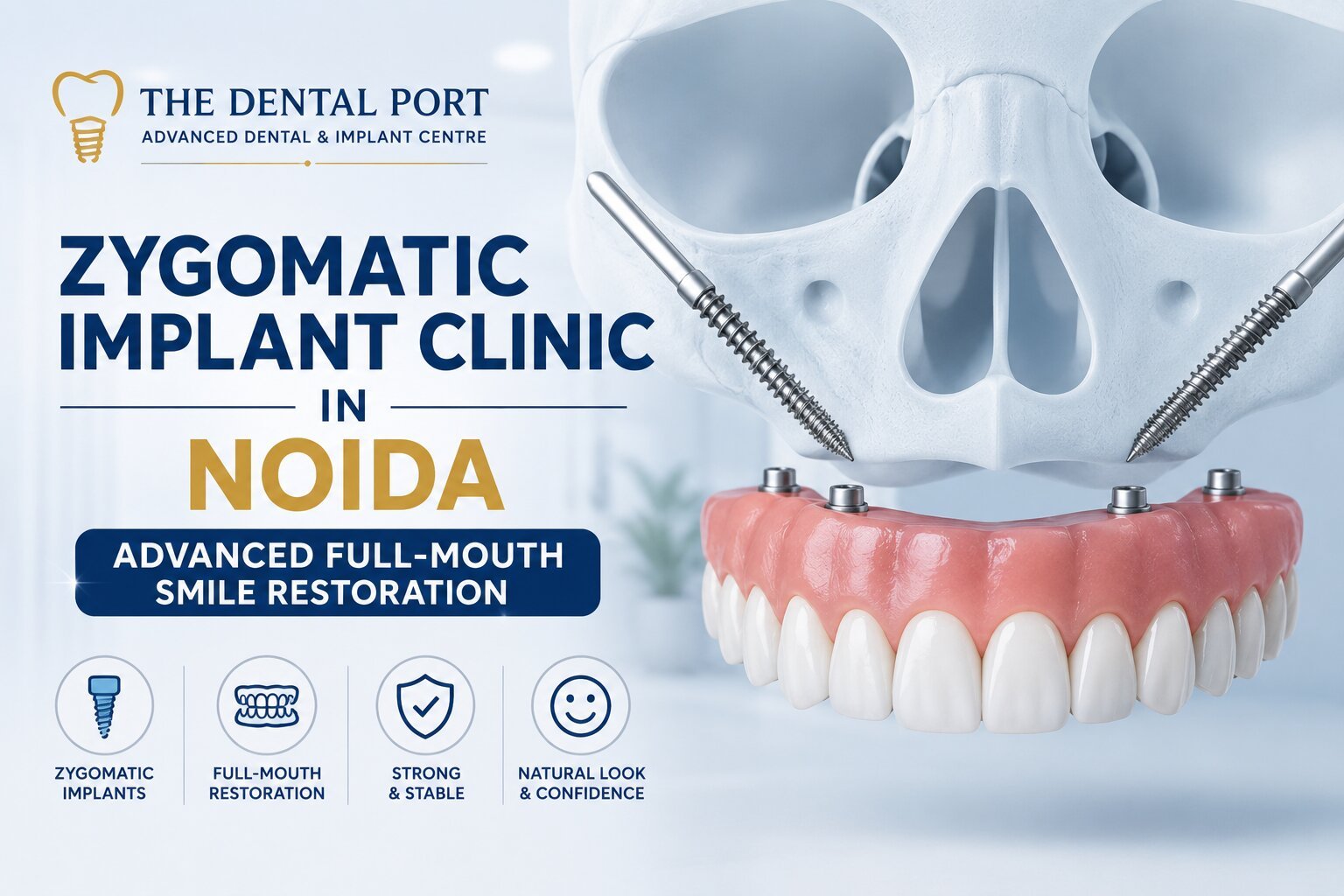
Zygomatic implants are specialized dental implants designed for patients who have insufficient bone in the upper jaw for conventional implant placement. Instead of relying primarily on the severely resorbed upper jawbone, these longer implants are anchored in the zygomatic bone, commonly known as the cheekbone.
The zygomatic bone generally provides strong structural support, making it possible to develop an implant-supported restoration for selected patients who may otherwise have limited options. Because the procedure is more complex than conventional implant treatment, careful diagnosis and specialist planning are essential.
Who May Benefit From Zygomatic Implants?
Zygomatic implants are not required for every patient with missing teeth. They are generally considered for individuals with significant bone loss in the upper jaw, particularly when conventional implants may not provide adequate support.
A patient may be evaluated for this treatment if they have:
- Severe upper-jaw bone resorption
- Multiple or complete tooth loss
- Previous unsuccessful bone-grafting procedures
- Insufficient bone for conventional implants
- Difficulty wearing traditional dentures
- A need for comprehensive upper-jaw rehabilitation
A detailed examination is necessary before deciding whether zygomatic implants are appropriate.
How Zygomatic Implants Differ From Conventional Implants
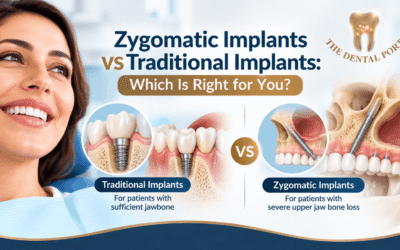
Traditional dental implants are generally placed into the jawbone where sufficient bone volume is available. When substantial bone loss has occurred, bone grafting or sinus augmentation may sometimes be considered before conventional implants can be placed.
Zygomatic implants use the zygomatic bone for anchorage. This can provide an alternative pathway for selected patients with severe upper-jaw bone deficiency. The treatment is highly individualized, and not every patient with bone loss is automatically a candidate. Advanced imaging and clinical evaluation are important for determining the safest and most appropriate approach.
Advanced Full-Mouth Smile Restoration
For patients with extensive tooth loss, the goal is not simply to replace individual teeth. Full-mouth rehabilitation aims to restore chewing function, speech, facial support, and smile aesthetics.
A zygomatic implant-supported restoration can be designed to replace multiple missing teeth with a fixed prosthetic solution when clinically appropriate. The final restoration is customized according to factors such as facial proportions, bite, tooth shape, smile aesthetics, and functional requirements. This comprehensive approach can help patients regain confidence while improving everyday oral function.
The Importance of 3D Digital Imaging
Complex implant procedures require accurate information about the patient’s anatomy. Three-dimensional dental imaging, such as CBCT scanning, can provide detailed views of the jaw, sinus region, and surrounding anatomical structures.
Digital imaging helps the dental team evaluate bone anatomy and plan implant positioning before treatment. For zygomatic implant procedures, accurate planning is particularly important because the implant pathway involves complex anatomical areas. Advanced digital planning can support more predictable surgical preparation and restoration design.
Is Zygomatic Implant Treatment Suitable for Everyone?
No. Zygomatic implants are an advanced treatment option for specific clinical situations. A patient’s general health, oral condition, bone anatomy, previous dental history, and treatment expectations all need to be considered.
A professional consultation may include clinical examination, digital imaging, evaluation of the existing teeth and gums, and discussion of medical and dental history. The dentist can then explain whether conventional implants, grafting, zygomatic implants, dentures, or another treatment approach may be more appropriate.
Benefits of Zygomatic Implants: For appropriately selected patients, zygomatic implants may offer several potential advantages.
Alternative to Extensive Bone Grafting: In selected cases of severe upper-jaw bone loss, zygomatic implants can provide an alternative approach to conventional implant treatment that would otherwise require substantial bone augmentation.
Strong Implant Anchorage: The zygomatic bone can provide a stable foundation for specially designed implants, making it possible to support a fixed dental restoration in appropriate cases.
Full-Mouth Rehabilitation: Zygomatic implants can be incorporated into comprehensive treatment plans designed to restore multiple missing teeth and improve oral function.
Improved Confidence : A stable, fixed restoration can provide greater confidence compared with loose or uncomfortable removable dentures for suitable patients.
What to Expect During the Treatment Process
Treatment begins with a comprehensive consultation and diagnostic assessment. Your dentist evaluates your oral health, bone anatomy, medical history, and treatment objectives.
If zygomatic implants are considered appropriate, a detailed treatment plan is prepared. The surgical stage involves carefully placing the specialized implants into the planned areas of the cheekbone.
After the required healing and stabilization period, the final prosthetic restoration is designed and fitted according to the patient’s bite and aesthetic requirements.
The exact treatment timeline varies significantly from patient to patient, so your dental team should provide an individualized schedule.
Why Choose The Dental Port for Advanced Implant Care?
Choosing the right dental center is particularly important for complex implant procedures. The Dental Port provides comprehensive implant evaluation, advanced digital diagnostics, personalized treatment planning, and restorative dental care.
Patients searching for a Dental Implant in Noida can discuss both conventional and advanced implant options according to their individual clinical requirements.
The focus is on understanding the patient’s needs before recommending a treatment rather than automatically selecting a particular procedure.
Expert Dental Care in Noida
Patients searching for a trusted Dental Clinic in Greater Noida often look for advanced technology, experienced dental professionals, comprehensive services, and a comfortable treatment environment.
The Dental Port combines these elements to provide customized solutions for patients with different levels of dental complexity.
If you are considering advanced implant treatment, choosing an experienced dental team is particularly important because complex cases require detailed diagnosis, careful planning, and appropriate follow-up.
Choosing the Best Dentist in Noida Sector 168
When considering zygomatic implants, experience and treatment planning are important factors. Patients looking for the Best Dentist in Noida Sector 168 should consider the clinic’s diagnostic capabilities, implant treatment experience, technology, sterilization practices, and approach to personalized care.
A detailed consultation allows you to understand your available treatment options, expected outcomes, potential risks, and long-term maintenance requirements.
Maintaining Your New Smile
Receiving implants is only one part of long-term oral rehabilitation. Proper maintenance is essential for protecting the implant-supported restoration and surrounding tissues.
Patients should maintain excellent brushing and interdental cleaning habits, attend regular dental checkups, follow professional maintenance recommendations, and report unusual swelling, discomfort, bleeding, or changes in the restoration.
Professional monitoring helps the dental team identify potential problems early and maintain the health of your restored smile.
Conclusion:
Zygomatic implants represent an advanced option for carefully selected patients with severe upper-jaw bone loss who require comprehensive tooth replacement. By using the zygomatic bone for implant anchorage, this approach can provide an alternative pathway for full-mouth rehabilitation in cases where conventional implant placement may be challenging.
FAQs – Zygomatic Implant Clinic in Noida
1. What is a zygomatic implant?
A zygomatic implant is a specialized dental implant that is anchored in the zygomatic or cheekbone rather than relying solely on the upper jawbone. It may be considered for patients with severe upper-jaw bone loss.
2. Who is a candidate for zygomatic implants?
Patients with significant upper-jaw bone loss who may not have enough bone for conventional implants can potentially be candidates. A detailed clinical examination and 3D imaging are required to determine suitability.
3. Are zygomatic implants better than conventional dental implants?
Neither option is universally better. Conventional implants are appropriate for many patients, while zygomatic implants may be considered for specific cases involving severe upper-jaw bone deficiency. Your dentist can recommend the most suitable approach after evaluation.
4. How long does zygomatic implant treatment take?
The timeline varies according to the patient’s condition, surgical plan, healing, and final restoration requirements. Your dental team can provide a personalized treatment timeline after completing the diagnostic assessment.
5. Why choose The Dental Port for zygomatic implant treatment in Noida?
The Dental Port provides comprehensive implant evaluation, advanced digital diagnostics, personalized treatment planning, and restorative care. Patients can discuss conventional and advanced implant options according to their individual dental needs.


Pingback: All-on-4 Dental Implants in Noida: Cost & Candidacy