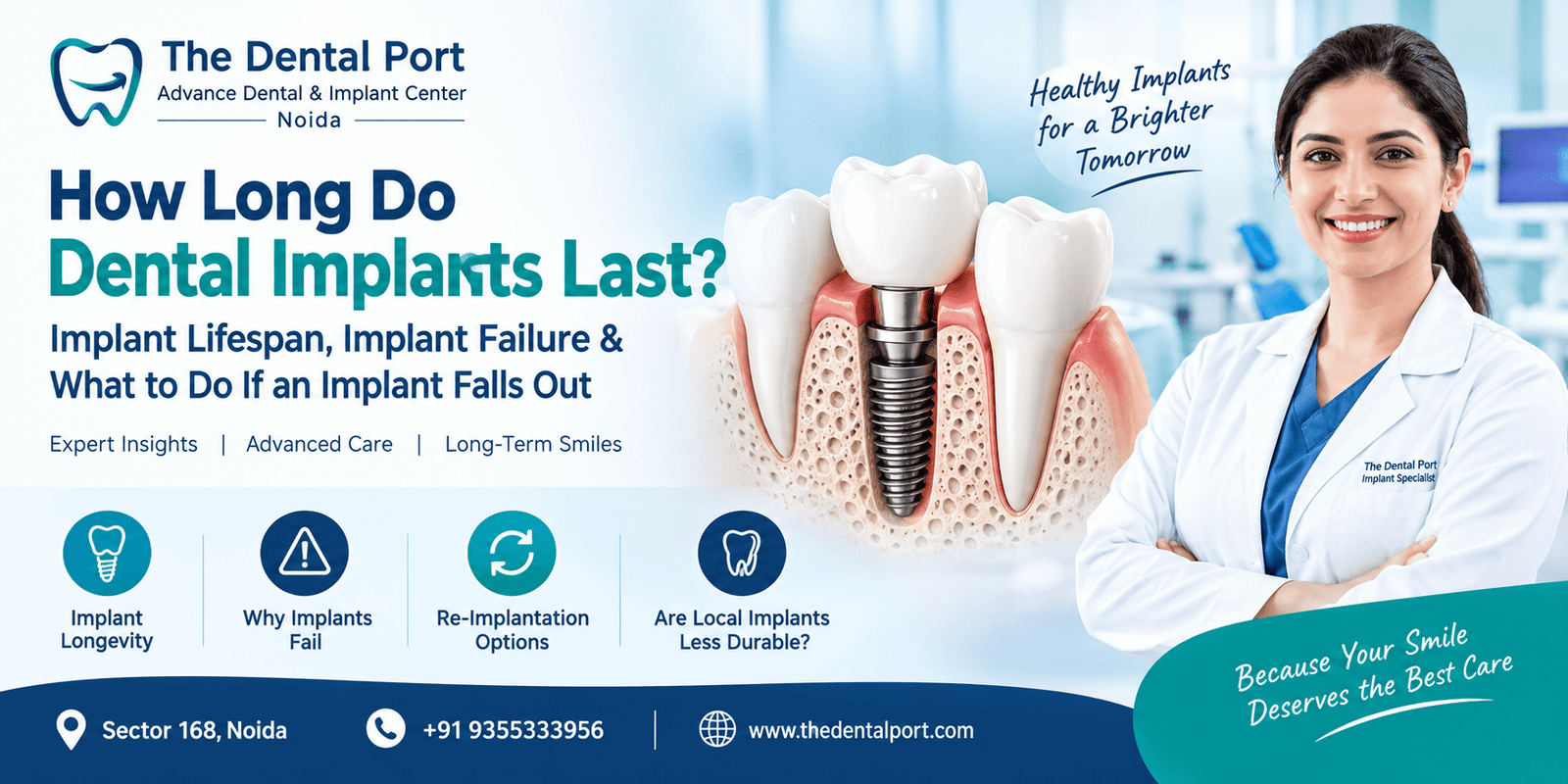
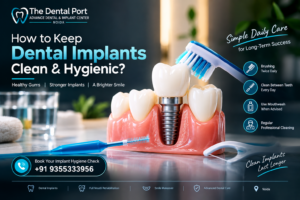
A dental implant is designed to replace a missing tooth, but keeping it healthy requires more than brushing the visible crown. The gums and bone surrounding the implant need consistent care to reduce plaque accumulation, inflammation and the risk of infection.
If you have recently received a dental implant, are planning implant treatment, or have noticed food getting trapped around an existing implant, understanding the right cleaning technique can make a real difference to your long-term oral health.
At The Dental Port – Advance Dental & Implant Center, Noida, we emphasise preventive care, personalised oral hygiene instructions and regular implant maintenance. Our goal is to help patients understand not only how dental implants are placed, but also how to care for them after treatment.
Need advice about an existing dental implant? Call +91 9355333956 to enquire about an implant hygiene assessment at The Dental Port, Noida.
Can Dental Implants Get Dirty or Infected?
Yes. Although an implant crown cannot develop tooth decay like a natural tooth, plaque can accumulate around the implant, particularly where the crown meets the gums.
When plaque is not removed effectively, the surrounding gum tissue may become inflamed. This condition is called peri-implant mucositis. If inflammation progresses and the supporting bone begins to break down, it may develop into peri-implantitis, a more serious condition that can threaten implant stability.
This is why a dental implant that looks clean on the outside may still require careful attention around the gumline.
Effective implant hygiene involves three essential steps:
- Removing plaque from the crown and around the gum margin.
- Cleaning between teeth and beneath implant-supported restorations where accessible.
- Attending regular dental reviews to identify early signs of inflammation or bone changes.
The right routine depends on the position of the implant, the shape of the crown, your gum health and whether you have a single implant, an implant-supported bridge or a full-arch restoration.
1. How to Clean Dental Implants Daily
A consistent home-care routine is the foundation of long-term implant maintenance. For most patients, brushing twice daily and cleaning between teeth once daily are essential habits.
Morning routine
Step 1: Choose a soft-bristled toothbrush.
A soft-bristled manual toothbrush or a suitable electric toothbrush can help remove plaque without unnecessary irritation to the gums.
Step 2: Brush the implant crown gently.
Clean the chewing surface, outer surface and inner surface of the crown. Use small, controlled movements instead of aggressive horizontal scrubbing.
Step 3: Pay attention to the gumline.
The junction between the implant crown and the gum is an important area for plaque removal. Angle your brush to clean this region thoroughly without pressing excessively into the tissue.
Step 4: Clean your remaining natural teeth.
Natural teeth surrounding an implant also need protection from cavities and gum disease. Use a fluoride toothpaste appropriate for everyday use.
Night routine
Night-time cleaning is especially important because plaque and food debris should not be left undisturbed around the implant for prolonged periods.
Before sleeping:
- Brush all teeth and implant crowns thoroughly.
- Clean between teeth and around the implant with an appropriate interdental tool.
- Pay extra attention to the back teeth and difficult-to-reach areas.
- Follow any additional instructions given by your implant dentist.
The most important principle: Clean the areas where plaque accumulates, not just the part of the implant you can see.
2. Which Toothbrush and Toothpaste Are Best for Dental Implants?
The best products are those that clean effectively while remaining comfortable for your gums and suitable for your particular restoration.
Toothbrush options
Soft manual toothbrush: A practical option for most patients when used with the correct technique.
Electric toothbrush: May help patients who struggle with manual dexterity or find consistent brushing difficult.
Single-tuft toothbrush: Can help reach specific areas around implant crowns, particularly near the gum margin or behind a restoration.
Your dentist can demonstrate the correct brushing angle and pressure based on your implant design.
Choosing toothpaste
A regular fluoride toothpaste is generally suitable for cleaning natural teeth around implants. A low-abrasivity formulation may be preferable when additional consideration is needed for the restoration’s surface.
Avoid aggressive scrubbing and abrasive products unless your dentist has specifically recommended them.
Remember that toothpaste alone cannot remove all plaque from tight spaces beneath bridges or around complex implant-supported restorations. Appropriate interdental cleaning remains essential.
3. How Should You Floss Around a Dental Implant?
Yes, cleaning between teeth is important even after dental implant treatment.
A toothbrush cannot effectively reach every surface between teeth. Plaque and food debris can accumulate in these spaces, including around the gumline of an implant.
The right tool depends on the space available and the design of your restoration.
Useful interdental cleaning tools
- Dental floss: May be suitable for accessible contacts around individual implant crowns.
- Floss threaders or specialised implant floss: Can help clean around certain bridges and beneath connected restorations.
- Interdental brushes: Useful where the spaces are wide enough for the brush to pass comfortably without force.
- Water flossers: Can help flush away loose food debris and support an overall hygiene routine, although they should not automatically replace every form of mechanical plaque removal.
Never force floss or an interdental brush into a tight space. Incorrect technique can injure the gums or damage the restoration.
If food repeatedly gets trapped around an implant, do not assume that more vigorous cleaning is the solution. The crown contour, contact between teeth or fit of the restoration may need professional assessment.
At The Dental Port, an implant hygiene review can help identify which cleaning method is appropriate for your particular situation.
4. Is Mouthwash Necessary After Dental Implant Treatment?
Mouthwash can be useful in selected situations, but it is not a substitute for brushing and interdental cleaning.
The type of rinse and the duration of use depend on your oral health and the stage of treatment.
- Fluoride mouthwash: May provide additional cavity protection for natural teeth when appropriate.
- Antiseptic mouthwash: May be recommended for specific clinical situations.
- Chlorhexidine mouthwash: Is sometimes prescribed for short-term use after certain dental procedures or when clinically indicated.
Chlorhexidine can cause temporary staining and changes in taste, among other possible effects. Use it according to your dentist’s instructions rather than as an indefinite daily solution.
After implant surgery, follow the specific instructions provided by your treating dentist. Do not rinse vigorously or begin additional products without checking whether they are appropriate for your stage of healing.
Avoid homemade chemical mixtures or harsh substances that may irritate oral tissues.
5. What Foods and Habits Should You Avoid With Dental Implants?
Once an implant restoration is functioning, most patients can gradually return to a varied diet according to their dentist’s advice. However, the healing phase and the design of the restoration matter.
During healing
- Follow the recommended diet after implant surgery.
- Choose softer foods if the area is tender.
- Avoid putting unnecessary pressure on the surgical site.
- Follow instructions about when to resume normal chewing.
After the implant crown is fitted
Avoid using your teeth to crack nutshells, bite ice or chew other unusually hard objects. These habits can damage natural teeth and dental restorations.
If food frequently becomes trapped around the implant, arrange an assessment rather than repeatedly changing your diet without understanding the cause.
Smoking and tobacco use
Smoking and tobacco use are important concerns in implant care. They are associated with impaired healing and a higher risk of complications, including peri-implant disease.
Stopping tobacco use can support better oral health and is worth discussing with your dentist, particularly before implant surgery and during healing.
Maintaining good general health, controlling blood sugar when relevant, and keeping regular dental appointments can also contribute to a more favourable long-term outcome.
6. How Often Should Dental Implants Be Professionally Cleaned?
Dental implants need ongoing professional monitoring, even when there is no pain or visible problem.
For many patients, a review around every six months may be a reasonable starting point. However, there is no single maintenance interval suitable for everyone. Your dentist may recommend more frequent visits if you have a history of gum disease, difficulty cleaning around the restoration, smoking-related risks or previous implant complications.
What happens during an implant maintenance visit?
Your dentist may:
- Examine the gums around the implant for redness, swelling or bleeding.
- Assess plaque accumulation and the accessibility of cleaning areas.
- Check the implant-supported crown or bridge for damage, looseness or food-trapping problems.
- Perform professional cleaning using instruments and techniques appropriate for the implant restoration.
- Assess your bite if you report discomfort while chewing.
- Recommend dental X-rays when clinically indicated to evaluate supporting bone levels.
- Review your home-care technique and plan the next maintenance visit.
Professional implant cleaning is different from simply polishing a natural tooth. The clinician must select suitable instruments and methods for the particular implant and restoration.
Regular maintenance helps identify problems early, but it cannot guarantee that an implant will never develop complications.
7. Warning Signs of Dental Implant Infection
One reason regular dental reviews matter is that early implant-related inflammation may be painless.
Do not wait for severe discomfort before seeking advice if you notice any of the following:
- Bleeding around the implant while brushing.
- Red, swollen or tender gums around the crown.
- Pus or discharge near the implant.
- Persistent bad breath or an unpleasant taste.
- Pain or discomfort while chewing.
- Repeated food trapping accompanied by gum irritation.
- A loose crown, bridge or implant.
A loose crown does not necessarily mean that the implant itself has failed, but it should be assessed promptly. Do not attempt to tighten or repair the restoration yourself.
Seek prompt dental care if you notice swelling, pus, persistent bleeding or increasing pain. Facial swelling, fever or difficulty swallowing or breathing requires urgent assessment; difficulty breathing or swallowing warrants emergency medical care.
Early professional evaluation can help determine whether the problem is related to the gums, the restoration, the implant components or another dental condition.
8. Peri-Implant Mucositis vs Peri-Implantitis: What Is the Difference?
Understanding these two conditions helps explain why implant hygiene should never be neglected.
| Feature | Peri-implant mucositis | Peri-implantitis |
|---|---|---|
| Main problem | Inflammation of the soft tissue around the implant | Inflammation associated with progressive supporting bone loss |
| Possible signs | Redness, swelling and bleeding | Bleeding, inflammation, possible pus and bone loss |
| Supporting bone | No additional progressive bone loss attributable to the condition | Progressive supporting bone loss is present |
| Management | Professional assessment, plaque control and improved hygiene | Specialist assessment may be needed, with treatment based on disease severity |
Mucositis can often be managed successfully when addressed early, but it should not be ignored. Peri-implantitis requires a more comprehensive assessment because damage to the supporting bone may affect the long-term stability of the implant.
Only a clinical examination, supplemented by appropriate investigations, can establish the diagnosis.
9. How Long Can Dental Implants Last With Proper Care?
Dental implants can function for many years, and some remain in service for decades. However, their longevity varies from patient to patient.
Long-term outcomes depend on several factors:
- The quality and quantity of supporting bone.
- Gum health and the presence of periodontal disease.
- Implant positioning and restoration design.
- Oral hygiene and attendance at maintenance appointments.
- Smoking and other individual risk factors.
- Overall health and the distribution of chewing forces.
It is important to distinguish the implant fixture from the crown or bridge attached to it. The implant may remain integrated with the bone while its restoration eventually requires repair or replacement due to wear or damage.
No dentist can responsibly guarantee a specific lifespan for every implant.
The most practical approach is to protect the surrounding tissues, clean consistently, attend recommended reviews and address warning signs early.
10. Dental Implant Maintenance at The Dental Port, Noida
Choosing dental implants is a significant decision. Good aftercare should be part of the treatment plan from the beginning, not something considered only when a problem develops.
At The Dental Port – Advance Dental & Implant Center, Noida, our approach to implant care focuses on patient education, clinical assessment and personalised maintenance guidance.
Depending on your needs, an implant review may include:
- Assessment of the gums and tissues surrounding the implant.
- Evaluation of plaque accumulation and cleaning access.
- Guidance on toothbrushes and interdental cleaning tools.
- Examination of the implant-supported crown or bridge.
- Professional cleaning when indicated.
- Further investigation or referral when signs of implant-related disease are present.
Whether you have a recently placed implant, an older implant that needs review, or a full-mouth implant restoration, the appropriate maintenance plan should be based on your clinical findings.
The objective is straightforward: help you keep your implant clean, comfortable and functional for as long as possible through appropriate daily care and regular professional monitoring.
Book a Dental Implant Hygiene Check in Noida
Have you noticed bleeding around your implant, food getting trapped near the crown, persistent bad breath or discomfort while chewing?
Do not ignore these changes simply because the implant looks normal.
A professional assessment can help identify the cause and determine whether you need hygiene guidance, professional cleaning, restoration adjustment or further treatment.
Contact The Dental Port – Advance Dental & Implant Center, Noida.
Call: +91 9355333956
Ask about a dental implant hygiene assessment and personalised implant maintenance advice.
Your dental implant deserves the same attention as the rest of your smile—with careful daily cleaning, appropriate professional care and timely attention to problems.
Frequently Asked Questions About Dental Implant Cleaning
1. How do I clean my dental implant at home?
Brush twice daily with a soft-bristled toothbrush and fluoride toothpaste, and clean between teeth once daily using a tool suitable for your restoration. Pay particular attention to the gumline around the implant.
2. Can dental implants develop cavities?
No. The implant fixture and its artificial crown do not develop cavities like natural teeth. However, plaque can cause inflammation and infection in the surrounding gum tissue and supporting bone.
3. Can I use an electric toothbrush on dental implants?
Yes. An electric toothbrush can be suitable for many implant patients. Use an appropriate brush head and gentle technique, and follow your dentist’s advice for your particular restoration.
4. Is a water flosser good for dental implants?
A water flosser can help remove loose food debris and support daily cleaning around implants. Your dentist can advise whether it should be combined with floss or an interdental brush.
5. Why does food get stuck around my dental implant?
Food trapping may occur because of the shape of the crown, the space between adjacent teeth, gum changes or the design of an implant-supported bridge. Persistent trapping should be assessed professionally.
6. How often should I get my dental implants professionally cleaned?
Many patients begin with reviews at approximately six-month intervals, but the correct frequency depends on gum health, medical and lifestyle risk factors, and the complexity of the restoration.
7. What are the first signs of dental implant infection?
Bleeding, redness, swelling, tenderness, pus, persistent bad taste and discomfort can be warning signs. Seek a dental assessment if these occur, even if the implant itself does not feel loose.
8. Can a dental implant fail because of poor cleaning?
Inadequate plaque control can contribute to peri-implant inflammation and peri-implantitis, which may lead to supporting bone loss and threaten implant stability. Implant complications can also have other causes.
9. Should I use chlorhexidine mouthwash every day after implant treatment?
Not necessarily. Chlorhexidine is generally used for specific indications and often for a limited period. Follow your dentist’s instructions rather than using it indefinitely.
10. Where can I get dental implant maintenance in Noida?
You can contact The Dental Port – Advance Dental & Implant Center, Noida, to enquire about implant assessment, cleaning guidance and maintenance. Call +91 9355333956 to discuss an appointment.
Medical note: This article provides general oral-health information and does not replace a dental examination or personalised clinical advice.