Dental Implants in Noida | Doctor-Led Guide by The Dental Port – Advance Dental & Implant Center
“How long will my dental implant last?”
It is one of the first questions patients ask when considering dental implants.
The honest clinical answer is that a dental implant can function successfully for many years and, in suitable patients with proper planning and maintenance, can remain functional for decades. But implant longevity is not determined by the implant screw alone.
An implant is part of a complete treatment system involving:
- The implant fixture placed inside the bone
- Bone and soft-tissue health
- The surgical technique and implant position
- The crown, bridge or full-mouth prosthesis
- Bite forces and chewing load
- Oral hygiene and maintenance
- Patient-related risk factors such as smoking and bruxism
At The Dental Port – Advance Dental & Implant Center, Noida, our approach to implant treatment begins with understanding the patient’s bone, gums, bite, medical history and final prosthetic requirements before deciding how an implant should be placed.
This is particularly important in complex cases, multiple missing teeth, full-mouth rehabilitation and patients who have experienced previous implant failure.
Quick Answer: How Long Do Dental Implants Last?
A well-planned dental implant can remain functional for many years and often decades.
However, the implant fixture and the crown or prosthesis have different expected maintenance requirements.
The titanium implant is designed to integrate with the jawbone through a process called osseointegration. The restoration attached to it may experience wear, chipping, loosening or changes in the bite and may eventually require repair, replacement or adjustment.
Therefore, asking only “How many years does an implant last?” does not provide the complete clinical picture.
The more important question is:
What has been done to give the implant the best possible biological, surgical and prosthetic conditions for long-term function?
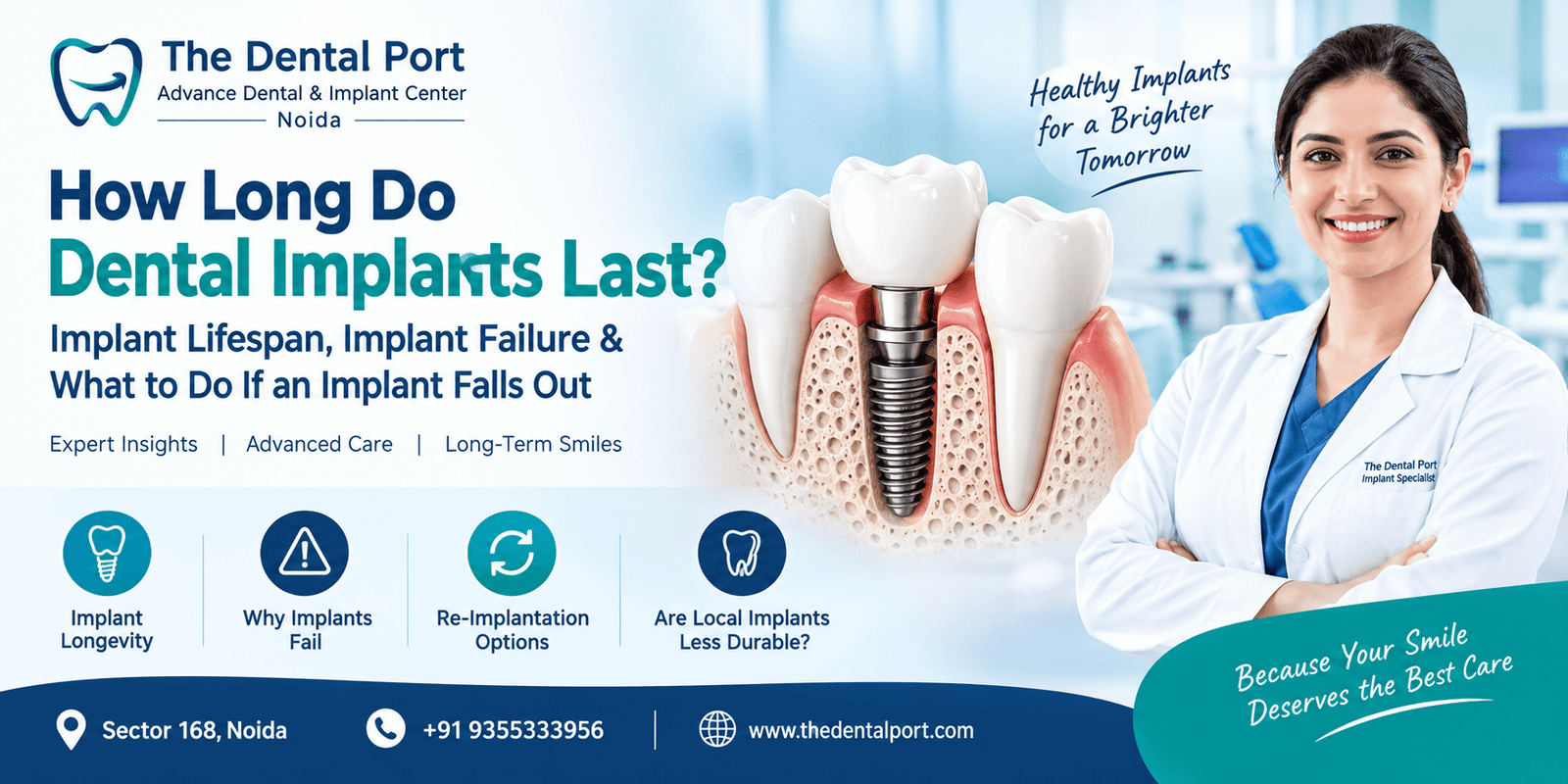
Dental Implant Fixture vs Crown: They Are Not the Same
Patients often use the term “implant” to describe the entire replacement tooth.
Clinically, there are several components.
1. Dental Implant Fixture
This is the screw-like component placed into the jawbone.
Its objective is to achieve stable integration with the surrounding bone.
2. Abutment
The abutment connects the implant fixture to the final restoration.
3. Crown, Bridge or Full-Mouth Prosthesis
This is the visible replacement tooth or teeth that restore appearance and chewing function.
The implant fixture can remain stable for a very long period when the surrounding bone and tissues remain healthy.
The prosthetic restoration, however, may eventually require maintenance because of:
- Normal wear
- Chipping
- Fracture
- Changes in bite
- Screw loosening
- Changes in the supporting prosthesis
This distinction is important when discussing the long-term cost and maintenance of dental implants.
What Determines How Long a Dental Implant Will Last?
There is no single factor that guarantees implant longevity.
In clinical practice, long-term implant outcomes depend on the interaction of several factors.
1. Accurate Diagnosis and Treatment Planning
Implant treatment should not begin simply by selecting an implant size and placing it into available bone.
The dentist needs to understand:
- Where the tooth needs to be restored
- Available bone volume
- Bone density
- Gum and soft-tissue condition
- Adjacent teeth
- Sinus or anatomical limitations
- Bite forces
- Esthetic requirements
- Final crown or prosthesis design
In many cases, CBCT imaging and digital treatment planning can help the implant team understand the three-dimensional anatomy before surgery.
This is particularly relevant when treating the upper front teeth, multiple implants, severe bone loss or full-mouth cases.
2. Bone Quality and Quantity
A dental implant needs sufficient bone support to achieve primary stability and subsequently integrate with the surrounding bone.
Previous tooth loss, infection, trauma, periodontal disease and long-term edentulism can result in bone resorption.
When bone volume is inadequate, the treatment plan may involve procedures such as:
- Bone grafting
- Guided bone regeneration
- Sinus augmentation
- Staged implant placement
- Alternative implant strategies in selected complex cases
The correct solution depends on the patient’s anatomy rather than a standard protocol applied to every patient.
3. Implant Position and Surgical Accuracy
Implant placement is not simply about putting the implant into bone.
The position should be planned in relation to the final restoration.
An incorrectly positioned implant can make the final crown difficult to clean or compromise the emergence profile and force distribution.
Poor positioning can also make hygiene more difficult and may contribute to biological or mechanical complications.
For this reason, implant planning should ideally begin with the final tooth or prosthesis in mind.
4. Crown Design and Bite Forces
The implant may be stable, but the forces transmitted through the crown or prosthesis still matter.
Excessive or poorly distributed bite forces can contribute to:
- Screw loosening
- Crown fracture or chipping
- Prosthetic complications
- Mechanical overload
- Bone stress
Patients with bruxism or heavy clenching may require additional bite assessment and protective measures such as a professionally planned night guard.
In full-mouth implant rehabilitation, controlling the overall bite becomes even more important because multiple implants and prosthetic teeth function together as one system.
5. Oral Hygiene and Peri-Implant Health
A dental implant is not immune to gum disease.
Plaque accumulation around an implant can initially cause inflammation known as peri-implant mucositis.
If inflammation progresses and bone loss develops around the implant, the condition may become peri-implantitis.
This can compromise implant stability.
Therefore, implant treatment does not end when the crown is delivered.
Long-term success requires:
- Daily plaque control
- Professional maintenance
- Periodic clinical examination
- Monitoring of the implant and surrounding tissues
- Early management of inflammation
6. Smoking and Implant Longevity
Smoking can adversely affect healing and oral tissue health.
It can increase the risk of complications during implant treatment and may contribute to inflammatory problems around implants.
Patients who smoke should discuss their smoking history openly with their implant dentist.
Risk assessment allows the clinician to plan treatment and maintenance more appropriately.
7. Teeth Grinding and Clenching
Bruxism can expose both implants and restorations to excessive forces.
Unlike a natural tooth, an implant does not have a periodontal ligament providing the same type of sensory feedback and force absorption.
Patients who grind or clench their teeth may therefore require additional preventive measures.
Depending on the case, treatment may include:
- Bite assessment
- Occlusal adjustment where clinically indicated
- Night guard
- Prosthetic design modifications
- Regular monitoring
Can a Dental Implant Fall Out?
Yes, although implant loss is not something that should be considered a normal outcome.
When an implant becomes loose or comes out, the important question is not simply:
“Why did my implant fall out?”
The more clinically useful question is:
“What caused the implant to fail, and what needs to be corrected before another implant is placed?”
Implant loss can occur relatively early after placement or years later.
The causes and treatment approach can be different.
Why Can a Dental Implant Fail Early?
Early Implant Failure
Early failure generally occurs during the period when the implant is expected to establish biological integration with the surrounding bone.
Potential contributing factors can include:
- Insufficient initial stability
- Infection
- Smoking
- Premature loading
- Poor bone conditions
- Certain patient-related risk factors
- Problems affecting healing
An early failed implant does not automatically mean that the patient cannot have another implant.
Once the cause has been identified and the site has been appropriately managed, re-treatment may be possible.
Why Can an Implant Fail Years Later?
Late implant complications can have different causes.
Common factors that clinicians investigate include:
Peri-implantitis
Inflammation around the implant accompanied by bone loss can progressively compromise support.
Excessive Bite Forces
Bruxism, clenching or an unfavorable bite can create excessive mechanical stress.
Prosthetic Problems
A poorly designed or difficult-to-clean restoration can increase the risk of mechanical or biological complications.
Inadequate Maintenance
Even an initially successful implant requires continuing oral hygiene and professional monitoring.
Late implant loss should therefore be investigated rather than simply replacing the implant without addressing the underlying cause.
What Should You Do If Your Dental Implant Becomes Loose or Falls Out?
If an implant becomes mobile or comes out:
Do not try to glue it back.
Do not attempt to force the implant or component back into the site.
Instead, contact your implant dentist promptly.
The clinician will typically need to determine:
- When the implant became loose or was lost
- Whether there was pain, swelling or infection
- Whether the implant was newly placed or had been functioning for years
- Whether bone loss is present
- Whether the surrounding gum tissue is healthy
- Whether excessive bite forces contributed to the problem
A clinical examination and appropriate imaging can help determine the next step.
Can a Failed Dental Implant Be Replaced?
In many cases, yes, re-implantation can be considered.
But the replacement implant should not simply be placed without understanding why the first implant failed.
Treatment may involve:
- Removing infected or inflamed tissue
- Cleaning and managing the implant site
- Allowing appropriate healing
- Bone grafting where necessary
- Correcting bite-related problems
- Improving hygiene and maintenance
- Replanning the implant position
- Selecting an appropriate implant design
- Replacing the implant once suitable stability can be achieved
The exact sequence depends on the clinical findings.
Can Another Implant Be Placed After Implant Failure?
Sometimes.
In selected situations, an implant may be replaced relatively soon after implant loss.
However, this is not appropriate for every patient.
The decision depends on factors such as:
- Presence or absence of infection
- Amount of remaining bone
- Primary stability that can be achieved
- Condition of the surrounding tissues
- Cause of the previous failure
- Location of the implant
- Final prosthetic requirements
A clinical examination and imaging are necessary before deciding between immediate, early or delayed re-implantation.
What If There Is Severe Bone Loss?
When an implant has failed after significant bone loss, simply placing another implant may not provide a predictable foundation.
Depending on the location and severity of bone deficiency, treatment may involve:
Bone Grafting
Bone augmentation may be considered where additional volume is required.
Guided Bone Regeneration
Selected defects may be managed using regenerative techniques designed to rebuild deficient bone.
Sinus Lift
In the posterior upper jaw, reduced vertical bone height can sometimes be associated with proximity to the maxillary sinus. A sinus augmentation procedure may be considered in suitable cases.
Alternative Implant Strategies
Patients with severe bone loss may require a more advanced treatment plan rather than conventional implant placement.
The appropriate approach must be determined from the patient’s anatomy and prosthetic requirements.
Are Indian or Locally Manufactured Dental Implants Less Durable?
Not automatically.
The country of manufacture alone does not determine the clinical longevity of an implant.
Patients should instead ask about the complete implant system, including:
- Manufacturer
- Implant design
- Surface characteristics
- Quality-control standards
- Regulatory compliance
- Clinical evidence
- Prosthetic components
- Availability of replacement components
- Long-term maintenance and documentation
A properly planned and appropriately restored implant can perform well regardless of whether the manufacturer is domestic or international.
Conversely, selecting a premium-priced implant does not compensate for poor diagnosis, incorrect positioning, inadequate prosthetic planning or poor maintenance.
The implant brand is one component of the treatment decision, not the entire treatment.
What Should You Ask Your Dentist Before Getting Dental Implants?
Before committing to implant treatment, patients should understand the complete treatment plan.
Ask your dentist:
1. Do I have enough bone for the planned implant?
If not, ask what augmentation procedure may be required.
2. Has my bite been evaluated?
This is particularly important if you grind or clench your teeth.
3. What type of implant system is being used?
Ask for the manufacturer and implant system details.
4. What restoration will be placed over the implant?
The crown or prosthesis is an important part of the treatment, not an afterthought.
5. What happens if the implant does not integrate?
Understand the clinic’s approach to implant failure and re-treatment.
6. What maintenance will I need after treatment?
Long-term implant care should be discussed before surgery.
7. Is CBCT or digital planning required for my case?
Imaging requirements depend on the clinical situation.
How Can You Make Dental Implants Last Longer?
Implant longevity is influenced by what happens after treatment as well as what happens during surgery.
A practical maintenance routine includes:
Daily
Maintain careful oral hygiene around the implant and restoration.
Depending on the prosthesis, your dentist may recommend:
- Interdental brushes
- Implant-specific floss
- Water flossers
- Other plaque-control methods
During Regular Dental Visits
Your dentist can assess:
- Implant stability
- Gum condition
- Bone levels where appropriate
- Prosthetic integrity
- Bite
- Hygiene
If You Grind Your Teeth
Discuss whether a night guard or other protective strategy is appropriate.
If Your Bite Feels Different
Do not ignore a new bite change, mobility or unusual sensation.
Early assessment can prevent a small prosthetic problem from becoming a larger complication.
Dental Implant Longevity: The Doctor’s Perspective
At The Dental Port – Advance Dental & Implant Center, Noida, we believe implant treatment should be approached as a complete rehabilitation rather than simply a surgical procedure.
The question is not only:
“Which implant should I buy?”
It is:
“Is the diagnosis correct, is the site suitable, is the implant positioned correctly, is the prosthesis designed properly, and can the patient maintain it long term?”
This becomes even more important in:
- Multiple dental implants
- Full-mouth rehabilitation
- Failed implant cases
- Severe bone loss
- Patients with periodontal problems
- Bruxism cases
- Complex esthetic implant cases
A properly planned implant treatment aims to create a stable relationship between bone, soft tissue, implant, prosthesis and bite.
Frequently Asked Questions About Dental Implant Lifespan
How many years do dental implants last?
Dental implants can function for many years and often decades when appropriate planning, surgery, restoration and maintenance are provided. The crown or prosthesis may require maintenance or replacement before the implant fixture itself.
Can a dental implant last a lifetime?
In some patients, an implant can remain functional for decades and potentially for the patient’s lifetime. However, no dentist should guarantee a specific lifetime for an individual implant because biological, mechanical and patient-related factors vary.
What causes dental implants to fail?
Implant failure can be associated with problems with bone integration, infection, peri-implantitis, excessive loading, smoking, inadequate maintenance, prosthetic complications and other patient-specific factors.
Can a failed dental implant be replaced?
Often, yes. Re-implantation may be possible after identifying and managing the cause of the original failure. Bone grafting or other preparatory treatment may sometimes be necessary.
Is implant failure common?
Dental implants have strong long-term clinical outcomes, but failures and complications can occur. Individual risk depends on factors such as bone condition, surgical planning, oral hygiene, smoking, bite forces and maintenance.
Are Indian dental implants less durable than foreign implants?
Not inherently. Country of manufacture alone does not determine implant longevity. The implant system, quality, clinical evidence, treatment planning, surgical execution, prosthetic design and maintenance all matter.
Can an implant be placed immediately after another implant fails?
In selected cases it may be possible, but it is not appropriate for every patient. Infection, bone availability, soft-tissue condition and the ability to obtain adequate stability must be assessed first.
Does smoking affect dental implants?
Yes. Smoking can adversely affect healing and tissue health and may increase the risk of implant-related complications.
Does teeth grinding affect implants?
Yes. Bruxism can place excessive forces on implants and restorations. Bite assessment and protective measures may be recommended for suitable patients.
When Should You See an Implant Dentist?
Seek professional evaluation if you notice:
- An implant feels loose
- Your implant crown moves
- Your bite suddenly feels different
- There is swelling around an implant
- Bleeding occurs repeatedly around an implant
- You experience persistent discomfort
- Food repeatedly gets trapped around the implant
- A crown or implant component breaks
- An old implant suddenly becomes mobile
Early evaluation can help identify whether the problem is biological, mechanical, prosthetic or bite-related.
Dental Implants in Noida: Doctor-Led Treatment at The Dental Port
If you are considering dental implants in Noida, have multiple missing teeth, are concerned about implant longevity, or have previously experienced implant failure, a detailed clinical assessment is the appropriate starting point.
At The Dental Port – Advance Dental & Implant Center, Noida, implant treatment is planned around the patient’s individual anatomy, oral health, bone condition, bite and final restoration requirements.
The objective is not simply to place an implant.
It is to create a treatment plan designed for function, hygiene, stability, aesthetics and long-term maintenance.
Book an Implant Consultation
The Dental Port – Advance Dental & Implant Center
Sector 168, Noida, Uttar Pradesh
For dental implants, implant failure evaluation, re-implantation, full-mouth rehabilitation and complex implant planning.
Call / WhatsApp: +91 9355333956
Website: www.thedentalport.com
Clinical suitability, treatment sequence and prognosis vary from patient to patient. A clinical examination and appropriate diagnostic imaging are required before an individualized implant treatment plan can be recommended.
Medical Content Review
Clinical perspective: The Dental Port – Advance Dental & Implant Center, Noida
Topic: Dental Implant Longevity, Implant Failure & Re-Implantation