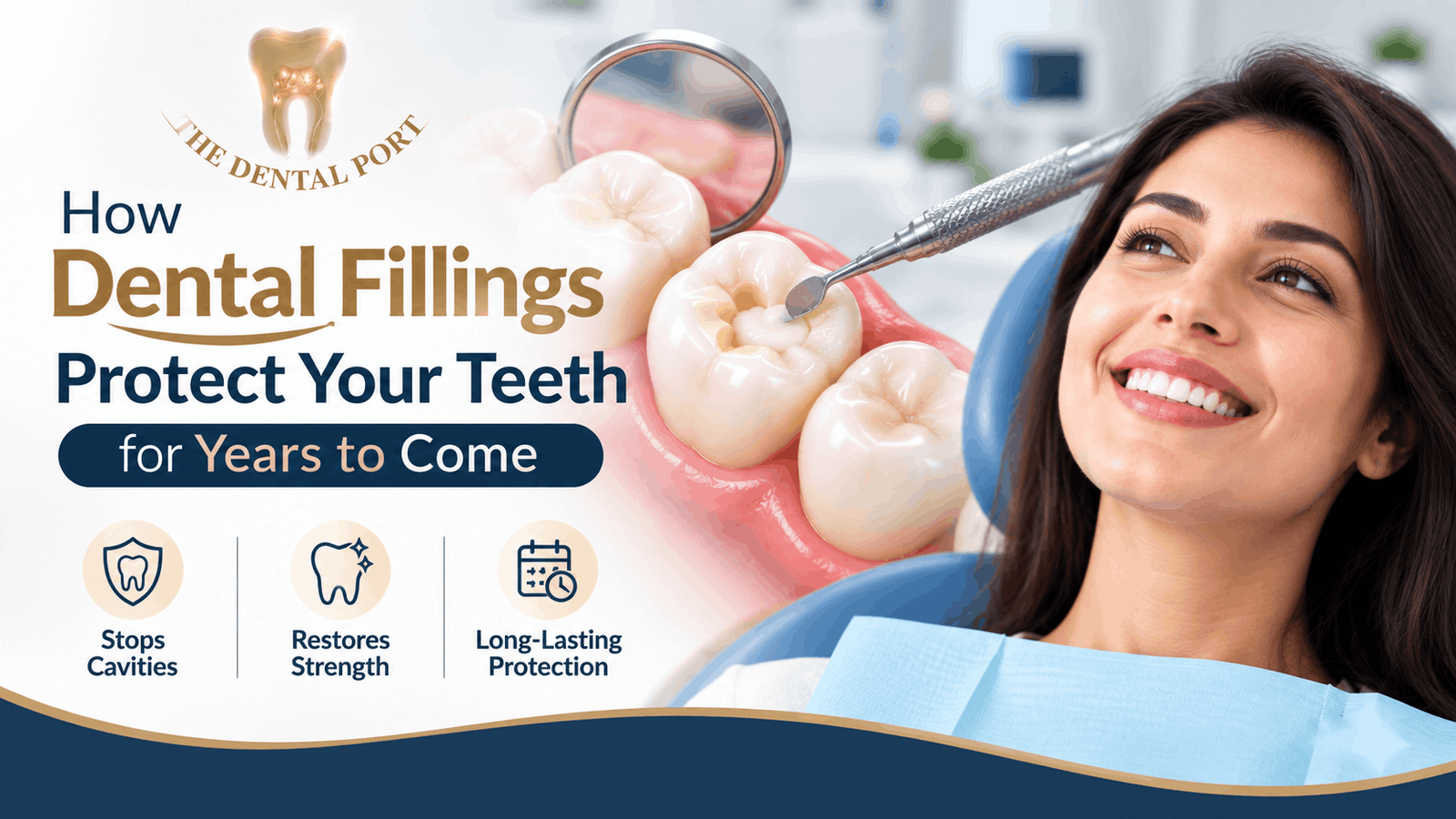
A small cavity may seem like a minor dental problem, but untreated tooth decay can gradually progress deeper into the tooth and eventually affect the dental pulp. Dental fillings are one of the most common restorative treatments used to repair teeth affected by cavities and restore their normal function. When a cavity is identified and treated at an appropriate stage, a filling can help preserve the remaining healthy tooth structure and reduce the risk of more extensive treatment.
For patients looking for Dental Fillings in Noida, understanding how fillings work and why timely treatment matters can make dental care less stressful. At The Dental Port, restorative dental care focuses on identifying tooth decay early and providing personalized treatment based on the condition of each tooth.
What Are Dental Fillings?
A dental filling is a restorative material used to repair a tooth after decay has been removed. During treatment, the dentist removes the damaged portion of the tooth, cleans the affected area, and fills the resulting space with an appropriate dental material.
Common filling materials include tooth-colored composite resin and other restorative materials. The choice depends on factors such as the location and size of the cavity, the amount of remaining tooth structure, biting forces, aesthetics, and individual treatment requirements. The primary goal is to restore the tooth while preserving as much healthy natural structure as possible.
How Do Cavities Develop?
Tooth decay develops when bacteria in dental plaque interact with sugars and produce acids that gradually weaken tooth enamel. Frequent consumption of sugary foods and drinks, inadequate oral hygiene, and certain individual risk factors can increase the likelihood of cavities.
A cavity may initially develop without noticeable symptoms. As decay progresses, it can become more difficult to treat. Regular dental examinations can help identify early decay before it reaches deeper layers of the tooth. This is why timely professional evaluation is an important part of preventive dental care.
How Dental Fillings Protect Your Teeth
The main purpose of a filling is to remove decay and restore the damaged portion of the tooth. By treating a cavity before it progresses further, a filling can help preserve the natural tooth and restore its shape and function.
A properly placed filling can also close the area affected by decay, making it easier to maintain the tooth with regular brushing and cleaning. Restoring the tooth can help prevent the cavity from continuing to enlarge. However, a filling does not make a tooth immune to future decay. Good oral hygiene and regular dental checkups remain important after treatment.
Why Early Treatment Matters
Ignoring a small cavity does not usually make it disappear. As decay progresses, it can reach deeper layers of the tooth and eventually affect the pulp.
If the pulp becomes infected or severely inflamed, more extensive treatment, such as root canal treatment, may become necessary. In cases where a tooth cannot be restored, extraction may also be considered. Early treatment with a filling can therefore help avoid more complicated procedures when the tooth is still suitable for straightforward restoration.
What Happens During a Dental Filling?
The filling procedure generally begins with a dental examination to determine the extent of decay. Local anesthesia may be used to keep the procedure comfortable.
The dentist then removes the decayed portion of the tooth and cleans the area. The selected filling material is placed into the prepared space and shaped to restore the tooth’s natural contour. For composite fillings, the material is typically hardened using a special curing light. The dentist then checks the bite and makes any necessary adjustments. The exact process depends on the location and size of the cavity.
Tooth-Colored Fillings for a Natural Appearance
Many patients prefer tooth-colored fillings because they can blend with the surrounding natural tooth structure. Composite resin can be carefully matched to the appearance of the tooth and shaped to maintain a natural-looking smile.
Tooth-colored restorations can be particularly useful for visible teeth where aesthetics are an important consideration. Your dentist can explain which material is appropriate based on the location and condition of the tooth.
How Long Can Dental Fillings Last?
The lifespan of a dental filling varies depending on the material used, the size and location of the restoration, biting forces, oral hygiene, diet, and individual habits.
Fillings can provide long-term service when properly maintained, but they are not necessarily permanent. Over time, a filling may become worn, chipped, loose, or develop leakage around its edges. Regular dental examinations allow your dentist to monitor existing restorations and determine whether they remain healthy and functional.
Habits That Help Protect Your Fillings
Taking care of a filled tooth is similar to caring for your natural teeth. Brush twice a day with fluoride toothpaste and clean between your teeth regularly.
Limiting frequent sugary snacks and acidic beverages can also help reduce the risk of new cavities. Avoid biting extremely hard objects or using your teeth as tools, as excessive forces can damage both natural teeth and restorations. If you grind or clench your teeth, discuss this with your dentist because excessive biting forces may affect the longevity of restorations.
Dental Fillings as Part of Comprehensive Dental Care
Fillings are only one part of preventive and restorative dentistry. A patient may also require professional cleaning, gum care, crowns, root canal treatment, or other procedures depending on their oral health.
At The Dental Port, patients can access comprehensive Dental Treatments based on their individual dental requirements. The focus is on identifying problems early and providing appropriate treatment while preserving healthy natural tooth structure whenever possible.
Choosing a Dental Clinic in Greater Noida
When searching for a Dental Clinic in Greater Noida, consider the clinic’s approach to diagnosis, treatment planning, technology, hygiene, communication, and follow-up care.
A good dental examination should not focus only on the cavity that is causing discomfort. The dentist should also assess surrounding teeth, gums, existing restorations, and overall oral health. This comprehensive approach can help identify other potential problems before they become more complicated.
Expert Care From Dr. Purnima Sharma
Professional diagnosis is essential when deciding whether a filling is appropriate. Dr. Purnima Sharma can evaluate the affected tooth and determine the extent of decay before recommending an appropriate restorative solution.
Patients searching for the Best Dentist in Noidashould look for a dental professional who provides clear explanations, individualized treatment planning, and appropriate follow-up rather than delaying treatment until symptoms become severe.
Preventing New Cavities After a Filling
Receiving a filling repairs an existing cavity, but preventing future decay requires ongoing care. Brush twice daily, floss or use another suitable inter dental cleaning method, maintain a balanced diet, and attend routine dental examinations.
Professional dental cleanings can also help remove plaque and tartar that cannot always be eliminated through normal brushing. If you experience sensitivity, pain, food getting trapped around a filling, or a change in the restoration, contact your dentist for an evaluation.
Conclusion
Dental fillings play an important role in protecting teeth affected by cavities. By removing decay and restoring the damaged area, a filling can help preserve natural tooth structure, restore function, and reduce the likelihood of decay progressing deeper into the tooth.
However, long-term protection depends on more than the filling itself. Good oral hygiene, healthy dietary habits, regular dental checkups, and timely treatment are essential for maintaining both restored and natural teeth.
If you are looking for Dental Fillings in Noida, The Dental Port provides personalized restorative care as part of comprehensive Dental Treatments in Noida. Whether you have a small cavity or are experiencing tooth sensitivity or discomfort, an examination at a trusted Dental Clinic can help identify the problem and determine an appropriate treatment plan.
With professional guidance from Dr. Purnima Sharma and a consistent approach to preventive dental care, you can take important steps toward maintaining healthy teeth for years to come.
FAQs – Dental Fillings in Noida
1. How do dental fillings protect teeth?
Fillings remove decayed tooth material and restore the resulting cavity. This helps stop the progression of the treated decay and restores the tooth’s shape and function.
2. How do I know if I need a dental filling?
A dentist can determine whether you need a filling through a clinical examination and, when necessary, dental imaging. Symptoms such as sensitivity, toothache, or visible damage may indicate a dental problem but do not confirm the need for a filling by themselves.
3. Do dental fillings last forever?
No. Fillings can provide long-term service, but their lifespan varies depending on the material, location, oral hygiene, biting forces, and individual habits. Regular checkups help monitor their condition.
4. Can I get a cavity under an existing filling?
Yes. Decay can develop around or beneath a restoration if bacteria gain access to the tooth. Regular dental examinations can help identify problems with existing fillings at an early stage.
5. Why choose The Dental Port for dental fillings in Noida?
The Dental Port provides comprehensive dental evaluation, personalized restorative treatment, modern dental care, and preventive guidance to help patients maintain healthy natural teeth and restorations.