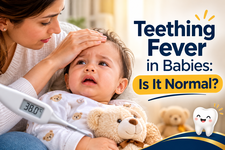
Does teething cause fever in babies? This is one of the most common questions parents ask when their baby starts developing swollen gums, excessive drooling and irritability.
When a baby’s first teeth begin to appear, parents may notice changes in feeding, sleep and behaviour. Some babies also feel slightly warmer than usual. However, it is important to understand that teething does not cause a genuine fever.
A temperature of 38°C (100.4°F) or higher should not automatically be attributed to teething. It may indicate an infection or another illness that needs medical attention.
At The Dental Port, Advance Dental & Implant Center, Sector 168, Noida, we believe that educating parents about their child’s oral health is an important part of preventive dental care.
This guide explains the difference between teething discomfort and illness, how to soothe sore gums, when to seek medical help and how to care for your baby’s first teeth.
Quick Answer: Can teething cause fever in babies?
No. Teething does not directly cause a true fever. Babies may experience sore or swollen gums, drooling, mild irritability and disturbed sleep during tooth eruption. However, a temperature of 38°C (100.4°F) or above should be investigated as a possible sign of infection rather than assumed to be caused by teething.
1. Is Fever Normal During Teething?
Teething usually begins around six months of age, although some babies develop their first tooth earlier or later.
As a tooth moves through the gum, the surrounding tissue can become swollen and tender. This may make your baby uncomfortable and slightly unsettled.
Common teething symptoms include:
- Increased drooling.
- Swollen or tender gums.
- Chewing on fingers, toys or other objects.
- Mild irritability.
- Temporary changes in feeding.
- Disturbed sleep.
- A mild increase in measured temperature that remains below 38°C.
However, a genuine fever is not considered a normal symptom of teething.
Important: If your baby’s temperature reaches 38°C or higher, look for another possible cause, such as a viral infection, ear infection or urinary tract infection. Contact your paediatrician for appropriate advice.
2. What Temperature Is Considered Fever in Babies?
A baby’s temperature can vary depending on the time of day, activity, clothing and the method used to measure it.
For practical purposes, a temperature of 38°C (100.4°F) or higher is generally considered a fever.
| Temperature | What it means | What parents should do |
|---|---|---|
| Below 38°C | No confirmed fever | Observe the baby’s behaviour and comfort |
| 38°C or above | Fever | Assess for other symptoms and contact your paediatrician as appropriate |
| Any fever in a baby under 3 months | Requires urgent medical assessment | Seek immediate medical advice |
Use a reliable digital thermometer and follow the manufacturer’s instructions. Do not rely only on touching your baby’s forehead to decide whether they have a fever.
A particularly important warning: A baby younger than three months with a temperature of 38°C or higher needs urgent medical assessment, even if the baby appears otherwise well.
3. How to Soothe a Teething Baby Safely
If your baby has typical teething symptoms without concerning signs of illness, a few simple measures can help relieve gum discomfort.
Use a chilled teething ring
Offer a clean teething ring that has been cooled in the refrigerator.
Avoid freezing it. Extremely cold or frozen objects can injure delicate gum tissue.
Gently massage the gums
Wash your hands thoroughly and gently massage your baby’s swollen gums using a clean finger.
Gentle pressure may temporarily relieve discomfort.
Continue breastfeeding or formula feeding
Maintain your baby’s usual feeding routine.
Breast milk and infant formula provide hydration and nutrition. If your baby has started complementary feeding, offer suitable foods according to their age and feeding readiness.
Keep your baby comfortable
Dress your baby in comfortable, lightweight clothing. Avoid excessive wrapping or overheating.
Give age-appropriate pain relief when necessary
If your baby appears to be in significant pain, consult your paediatrician about an appropriate pain-relieving medicine.
- Paracetamol: Can be considered when appropriate for the baby’s age and weight, following medical advice.
- Ibuprofen: Generally used only from six months of age, subject to medical advice and the product’s instructions.
Never exceed the recommended dose or combine medicines without professional guidance.
Avoid these remedies:
- Aspirin in children.
- Teething necklaces and amber jewellery.
- Alcohol or home-made gum preparations.
- Benzocaine-containing teething gels in babies.
- Unsupervised use of lidocaine-containing products.
- Frozen teething rings.
- Honey for babies under 12 months.
These products may cause choking, poisoning, medication-related complications or other harm.
4. Teething or Infection? How Can Parents Tell the Difference?
Teething and common childhood infections can occur at the same age. This sometimes makes it difficult for parents to identify the actual cause of their baby’s symptoms.
The following comparison can help, but it cannot replace a medical examination.
| Symptom | More consistent with teething | May indicate illness |
|---|---|---|
| Temperature | Usually below 38°C | 38°C or higher |
| Drooling | Increased | May or may not occur |
| Gum appearance | Swollen or tender | May appear normal |
| Chewing | Frequently chews objects | Not a reliable indicator |
| Irritability | Usually mild or intermittent | May be persistent or severe |
| Feeding | Mild temporary discomfort | Significant refusal to feed |
| Diarrhoea | Not an established teething symptom | May occur with infection |
| Vomiting | Not a typical teething symptom | May indicate illness |
| Runny nose or cough | Not caused by tooth eruption | May indicate a respiratory infection |
| Rash | Drool-related irritation around the mouth may occur | A widespread rash needs assessment |
One important point: diarrhoea, vomiting, high fever and persistent cough should not be dismissed as teething symptoms.
5. When Should You Take Your Baby to a Doctor?
Parents should seek medical attention if their baby develops symptoms that are not typical of uncomplicated teething.
Contact a paediatrician promptly if your baby has:
- A temperature of 38°C or higher.
- Fever lasting more than 24 to 48 hours or recurring.
- Repeated vomiting or diarrhoea.
- Reduced feeding or fewer wet nappies.
- Persistent crying or unusual irritability.
- A new or widespread rash.
- Signs of dehydration.
Seek urgent medical assessment if:
- Your baby is younger than three months and has a temperature of 38°C or higher.
- Your baby is unusually sleepy, difficult to wake or unresponsive.
- Your baby has difficulty breathing.
- Your baby develops a seizure.
- Your baby has a non-blanching rash, which does not fade when pressed.
- Your baby appears seriously unwell.
Do not wait for the temperature to rise further if your baby has any of these warning signs.
6. When Do Babies Start Teething?
Most babies develop their first tooth at around six months, although the timing varies considerably.
The lower front teeth usually appear first, followed by the upper front teeth.
A general eruption timeline is:
| Teeth | Approximate age |
|---|---|
| Lower central incisors | 6–10 months |
| Upper central incisors | 8–12 months |
| Upper lateral incisors | 9–13 months |
| Lower lateral incisors | 10–16 months |
| First molars | 13–19 months |
| Canines | 16–23 months |
| Second molars | 23–33 months |
These are approximate ages, not strict deadlines. Some healthy babies develop teeth earlier or later.
If your baby has not developed a first tooth by around 12–18 months, discuss the timing with a paediatric dentist.
7. When Should You Start Cleaning Your Baby’s Teeth?
Oral care should begin as soon as the first tooth appears.
Many parents believe that baby teeth do not need much attention because they eventually fall out. This is incorrect.
Primary teeth help children chew, develop speech and maintain space for permanent teeth.
Follow these simple steps:
Before the first tooth: Gently clean your baby’s gums using a clean, soft, damp cloth.
After the first tooth appears: Brush twice daily using a soft, age-appropriate toothbrush and a smear of fluoride toothpaste approximately the size of a grain of rice (around 1,000 ppm fluoride).
From age three onwards: Use a pea-sized amount of fluoride toothpaste, with adult supervision.
Do not allow your baby to fall asleep with a bottle containing milk, formula or sweetened liquids.
Avoid adding sugar or honey to pacifiers or feeding bottles.
8. When Should Your Baby Visit a Paediatric Dentist?
Your baby’s first dental visit should take place when the first tooth appears and no later than the first birthday.
An early dental examination helps identify:
- Early childhood tooth decay.
- Problems with tooth eruption.
- Abnormalities in the developing teeth.
- Gum and oral hygiene concerns.
- Feeding and oral habits that may affect dental health.
A paediatric dentist can also demonstrate the correct brushing technique and advise parents about fluoride, diet and cavity prevention.
At The Dental Port, we encourage parents to establish healthy oral hygiene habits from the beginning rather than waiting until a dental problem develops.
Frequently Asked Questions About Teething Fever in Babies
1. Does teething cause fever in babies?
No. Teething does not directly cause a true fever. It may coincide with a slight temperature increase, but a temperature of 38°C or higher should be investigated for another cause.
2. What temperature is considered a teething fever?
There is no medically established teething fever. A temperature below 38°C is not generally classified as a fever. A reading of 38°C or higher requires attention, particularly in young infants.
3. How long does teething discomfort last?
Discomfort may occur for a few days around the time a tooth emerges. Symptoms vary between babies. Persistent fever, diarrhoea or vomiting should not be attributed to teething.
4. Can teething cause diarrhoea?
No convincing medical evidence establishes teething as a cause of diarrhoea. Frequent watery stools may indicate an infection or another digestive problem. Monitor hydration and contact your paediatrician.
5. Is fever normal in a six-month-old baby during teething?
A six-month-old may develop sore gums, drooling and irritability during tooth eruption. However, a temperature of 38°C or higher is a fever and should not automatically be blamed on teething.
6. What is the safest way to relieve teething pain?
A chilled refrigerator-cooled teething ring, gentle gum massage and appropriate feeding are useful options. Consult your paediatrician before giving pain medication or using teething gels.
7. When should I take my baby to a dentist for the first time?
Schedule the first dental visit when the first tooth appears or by the first birthday, whichever comes first.
Give Your Baby a Healthy Start to Oral Health
Teething is a natural part of your baby’s development, but fever should never be ignored simply because new teeth are appearing.
If your baby has swollen gums, discomfort or difficulty feeding, a dental assessment can help identify oral health concerns. If your baby has a fever or appears unwell, consult a paediatrician first.
The Dental Port | Advance Dental & Implant Center
H-003, Nimbus The Golden Palm, Sector 168, Noida, Uttar Pradesh 201305.
For appointments and dental guidance:
Call: +91 93553 33956
WhatsApp: +91 93553 33956
Website: https://www.thedentalport.com
Your child’s healthy smile begins with good oral care from the very first tooth.
Medical Disclaimer
This article is intended for general educational purposes and does not replace an examination or diagnosis by a qualified paediatrician or paediatric dentist. Fever in infants, particularly those under three months, requires prompt medical assessment. Always consult an appropriate healthcare professional before giving medicines to a baby.
References
- Massignan C, Cardoso M, Porporatti AL, et al. Signs and symptoms of primary tooth eruption: a meta-analysis. Pediatrics. 2016;137(3):e20153501.
- McIntyre GT, McIntyre GM. Teething troubles? British Dental Journal. 2002;192(5):251–255.
- Ramos-Jorge J, Pordeus IA, Ramos-Jorge ML, Paiva SM. Prospective longitudinal study of signs and symptoms associated with primary tooth eruption. Pediatrics. 2011;128(3):471–476.
