The Dental Port – Advanced Dental & Implant Center, Noida Sector 168
Introduction
When someone chooses a dental implant, the question that comes up almost immediately is simple and honest.
How long will this last?
A dental implant is not just a treatment. It becomes part of daily life. You eat with it, smile with it, and trust it like your natural tooth. At The Dental Port – Advanced Dental & Implant Center in Noida Sector 168, many patients ask about durability before starting treatment. Understanding how long implants last and what affects their lifespan helps patients feel confident and prepared.
Why Dental Implants Are Made for Long Term Use
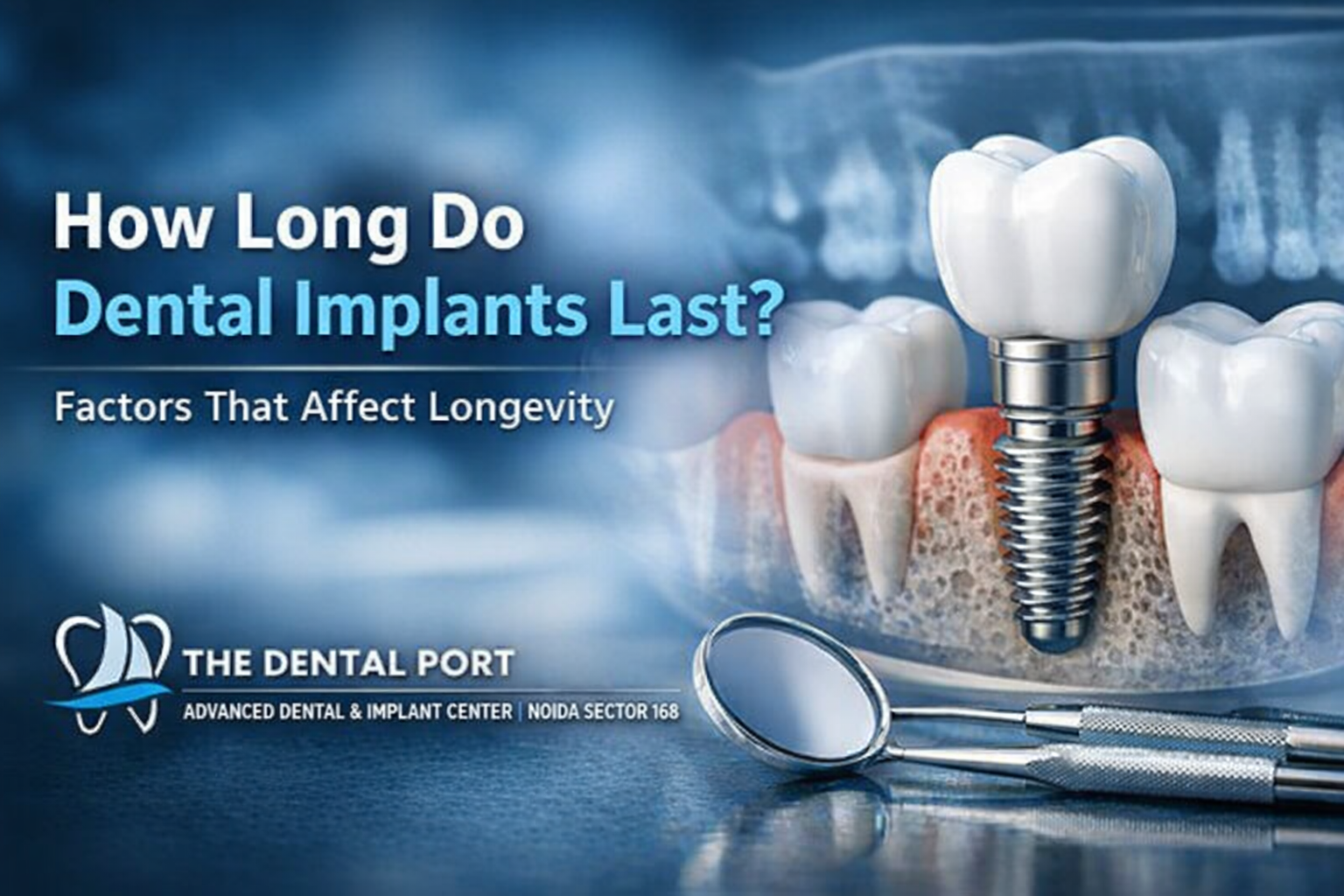
A dental implant works differently from bridges or dentures. Instead of resting on the gums or depending on nearby teeth, the implant joins directly with the jawbone.
The titanium post acts like a replacement root. Over time it fuses with the bone and becomes stable enough to handle everyday chewing. This strong connection is why dental implants feel natural and secure.
The implant itself does not develop cavities or decay. It is designed to stay stable for many years. The crown, which is the visible tooth part, may need replacement eventually due to normal wear from chewing.
How Long Do Dental Implants Last?
With good care, many dental implants last 20 years or more. In many cases, they remain healthy for a lifetime.
Some patients continue using the same implant for decades without problems. Others may face issues earlier if healing conditions were not ideal or oral hygiene was neglected.
The lifespan of an implant depends less on the material and more on how well the mouth supports it and how it is maintained over time.
Factors That Affect Dental Implant Longevity
Bone Quality and Strength
The jawbone is the foundation of the implant. A healthy, dense bone helps the implant integrate securely. If bone volume is low, the implant may need additional support such as bone grafting before placement.
At The Dental Port, detailed diagnostic scans help evaluate bone strength so the treatment plan is safe and long lasting.
Oral Hygiene Habits
While the implant cannot decay, the surrounding gums can still develop infection. Poor cleaning can lead to inflammation around the implant, which may weaken the supporting bone.
Daily brushing, flossing, and professional cleanings help protect the gums and keep the implant stable for years.
Smoking and Tobacco Use
Smoking slows healing and reduces blood supply to the gums. This increases the chance of early implant complications and long term bone loss around the implant.
Reducing or stopping tobacco use during healing greatly improves success rates.
General Health Conditions
Conditions such as uncontrolled diabetes can affect healing and bone health. This does not mean implants are not possible, but proper management and monitoring are important.
When overall health is stable, implant outcomes improve significantly.
Teeth Grinding or Clenching
Nighttime grinding places extra pressure on implants and crowns. Over time this stress can cause wear or discomfort.
A custom night guard can protect both natural teeth and implants from excessive force.
Skill and Planning of the Dentist
Accurate positioning of the implant is essential for long term success. Angle, depth, and spacing all influence comfort and durability.
Careful planning and experienced placement ensure the implant feels natural and remains stable over time.
How to Help Your Dental Implant Last Longer
Patients who enjoy long lasting implants usually follow simple habits:
- Brush twice daily and clean around the implant carefully
- Visit your dentist regularly for checkups and cleaning
- Avoid chewing very hard objects like ice or hard candies
- Manage medical conditions that affect healing
- Use a night guard if you grind your teeth
Consistent care protects the supporting gums and bone.
When Should You Visit Your Dentist?
Even a strong implant should be checked if you notice:
- Change in the way your bite feels
- Swollen or bleeding gums near the implant
- Discomfort while chewing
- Any slight movement of the crown
Early attention helps prevent bigger problems and protects long term results.
Conclusion
Dental implants are one of the most reliable ways to replace missing teeth. With proper planning, healthy habits, and routine care, they can remain stable for decades and feel just like natural teeth.
If you are considering dental implants or want to ensure your existing implant stays healthy, the team at The Dental Port – Advanced Dental & Implant Center, Noida Sector 168 focuses on long term care and patient comfort at every stage of treatment.
FAQ
How long do dental implants usually last?
Most dental implants last 20 years or longer when supported by healthy gums and good oral hygiene.
Can dental implants fail?
Yes, but failure is uncommon when the implant is placed correctly and maintained with regular care.
Does the implant or crown need replacement?
The implant post often lasts for decades, while the crown may need replacement after years of normal use.
Is dental implant treatment safe?
Yes, dental implants are considered a safe and predictable option when planned and performed by experienced professionals.
How can I make my dental implant last longer?
Maintain good oral hygiene, attend regular dental visits, avoid smoking, and protect your teeth from grinding.


Pingback: Dental Implant Cost in India 2026 – Complete Patient Guide - The Dental Port