
The Dental Port – Advance Dental & Implant Center, Noida
Call: +91 9355333956, +91 7836983698
Your mouth often gives early warnings when something is wrong. Ignoring urgent dental symptoms can allow minor problems to turn into serious infections, tooth loss, or long-term damage to your jaw and gums.
At The Dental Port – Advance Dental & Implant Center, Noida, we regularly see patients who delayed treatment and later required complex procedures that could have been avoided with timely care.
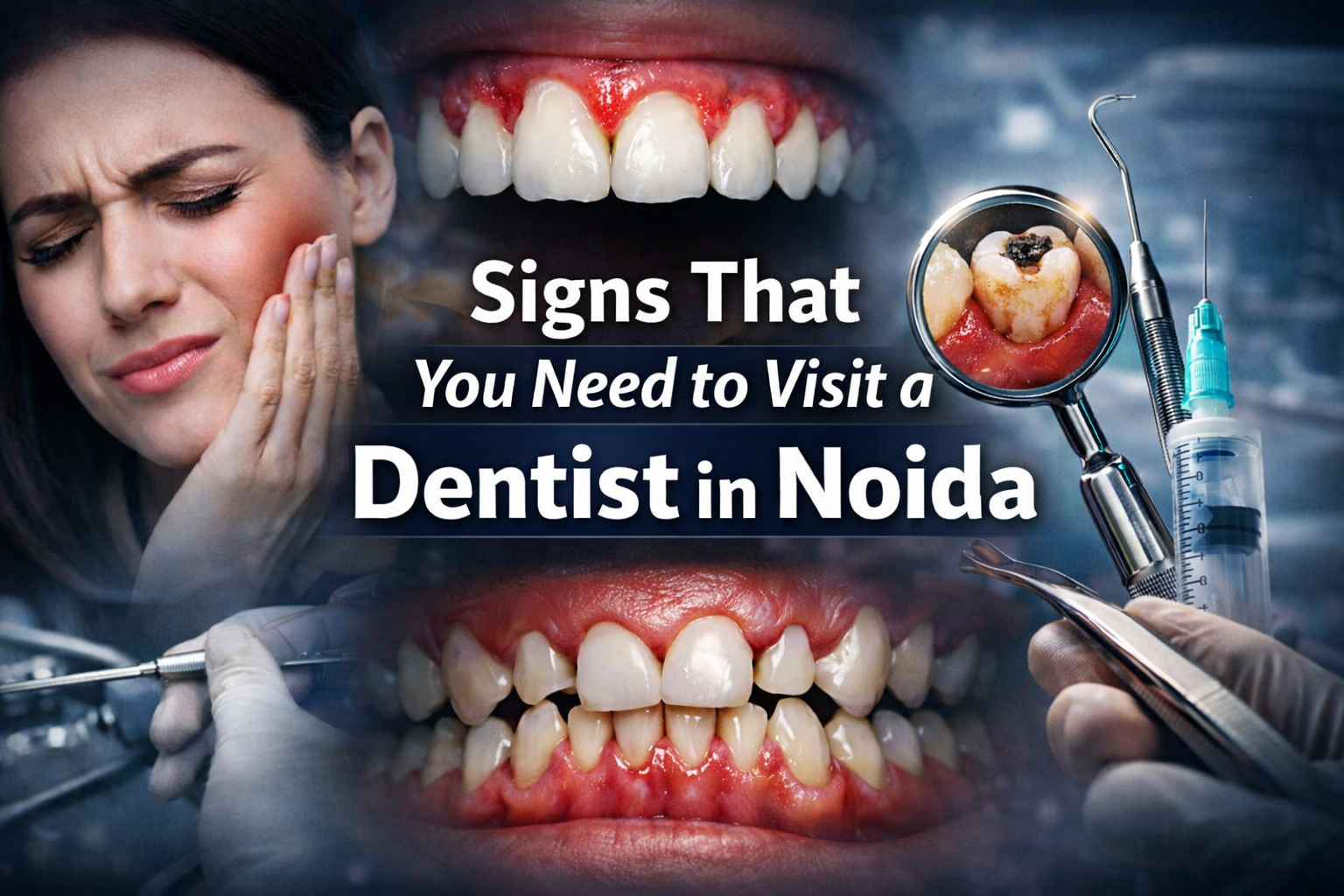
In this article, we explain six clear signs that mean you should visit a dentist immediately, along with simple steps you can take to protect your oral health.
1. Severe Toothache That Does Not Go Away
A strong, continuous toothache is one of the most common dental emergencies.
If the pain is throbbing, keeps you awake at night, or does not improve with pain medication, it may indicate:
- Deep tooth decay reaching the nerve
- Infection inside the tooth
- A dental abscess
- A cracked or fractured tooth
When bacteria reach the pulp, the infection can spread to the jawbone, face, or bloodstream if left untreated.
What to do
Call your dentist immediately. Rinse gently with warm salt water and take prescribed pain relief if needed. Do not place aspirin directly on the tooth or gums.
2. Swelling in the Face, Jaw, or Gums
Swelling is a serious warning sign that an infection may be spreading beyond the tooth.
Common causes include:
- Dental abscess
- Advanced gum disease
- Impacted wisdom teeth
- Severe gum infection
You should be especially concerned if swelling is accompanied by:
- Fever or chills
- Difficulty opening your mouth
- Trouble swallowing or breathing
- Bad taste or pus in the mouth
What to do
This is a dental emergency. Contact your dentist immediately. If breathing or swallowing becomes difficult, go to the nearest emergency hospital.
3. Persistent Bad Breath or Foul Taste
Occasional bad breath is common, but chronic bad breath that does not improve with brushing and flossing often indicates a deeper problem.
Possible causes include:
- Gum disease
- Tooth infection
- Accumulation of plaque and tartar
- Pus discharge from an abscess
- Loose or infected dental fillings
Persistent bad breath is often linked to periodontal disease, which is one of the leading causes of tooth loss in adults.
What to do
Schedule a dental examination as soon as possible. Early treatment of gum disease can prevent bone loss and tooth mobility.
4. Loose or Shifting Teeth in Adults
Loose teeth in adults are never normal and require urgent evaluation.
Common causes include:
- Advanced gum disease causing bone loss
- Dental trauma or injury
- Untreated infections
- Teeth grinding or clenching
- Weak jawbone support
When teeth become loose, there is a limited time window to save them.
What to do
Contact your dentist immediately. Avoid chewing on the affected side and do not move the tooth with your fingers or tongue.
5. Cracked, Chipped, or Broken Tooth
A broken or cracked tooth may look small, but it can expose the inner layers of the tooth to bacteria.
You need urgent care if you notice:
- Severe pain
- Bleeding that does not stop
- Visible red or pink tissue inside the tooth
- A large piece of tooth missing
- Tooth mobility after the fracture
Even minor cracks can worsen quickly if left untreated.
What to do
Rinse gently with warm water. Save any broken fragment in milk or saliva. Apply a cold compress outside the cheek and contact your dentist for an emergency appointment.
6. Sudden and Intense Tooth Sensitivity
Mild sensitivity is common, but severe or prolonged sensitivity is a warning sign.
Be concerned if:
- Pain lasts more than 20 seconds after hot or cold exposure
- Sensitivity is accompanied by swelling or bleeding
- There is visible decay or dark spots on the tooth
- You notice a small bump near the gum line
- You feel feverish along with dental pain
This may indicate nerve inflammation, deep decay, or infection that may require root canal treatment.
What to do
Avoid very hot, cold, or sugary foods and drinks. Use a desensitising toothpaste if available and contact your dentist without delay.
Frequently Asked Questions
How often should I visit a dentist
Visit your dentist every six months for routine check-ups and professional cleaning. Regular visits help detect problems early.
What is considered a dental emergency
Dental emergencies include:
- Severe toothache
- Facial or jaw swelling
- Broken or knocked-out tooth
- Uncontrolled bleeding
- Non-healing mouth sores
If unsure, it is always safer to call your dentist.
Can a toothache go away on its own
Temporary relief is possible, but the underlying cause usually worsens without treatment. Always get persistent pain evaluated.
Why do my gums bleed while brushing
Bleeding gums are often due to gingivitis or plaque buildup. Persistent bleeding may indicate gum disease and needs professional care.
What happens if I delay dental treatment
Delaying care can lead to:
- Tooth loss
- Bone damage
- Spread of infection
- More complex and expensive treatments
Early treatment always saves time, cost, and discomfort.
When to Contact The Dental Port, Noida
If you experience any of the signs mentioned above, do not wait.
At The Dental Port – Advance Dental & Implant Center, Noida, we provide:
- Emergency dental care
- Advanced infection management
- Root canal treatment
- Gum disease therapy
- Dental implants and restorations
📞 Call us now:
+91 9355333956
+91 7836983698
Early attention protects your smile, your health, and your confidence.